
Career progression in product marketing has never followed a straight line. But in 2026, the paths forward have multiplied in ways that would have been hard to predict even five years ago.
Unlike sales or engineering, where seniority often means doing a bigger version of the same job, experienced PMMs find themselves uniquely positioned to move in several very different directions. The question is knowing which one to take.
The statistics and findings from this article are within the Product Marketing Leadership 2026 eBook. 👇
 Charley Gale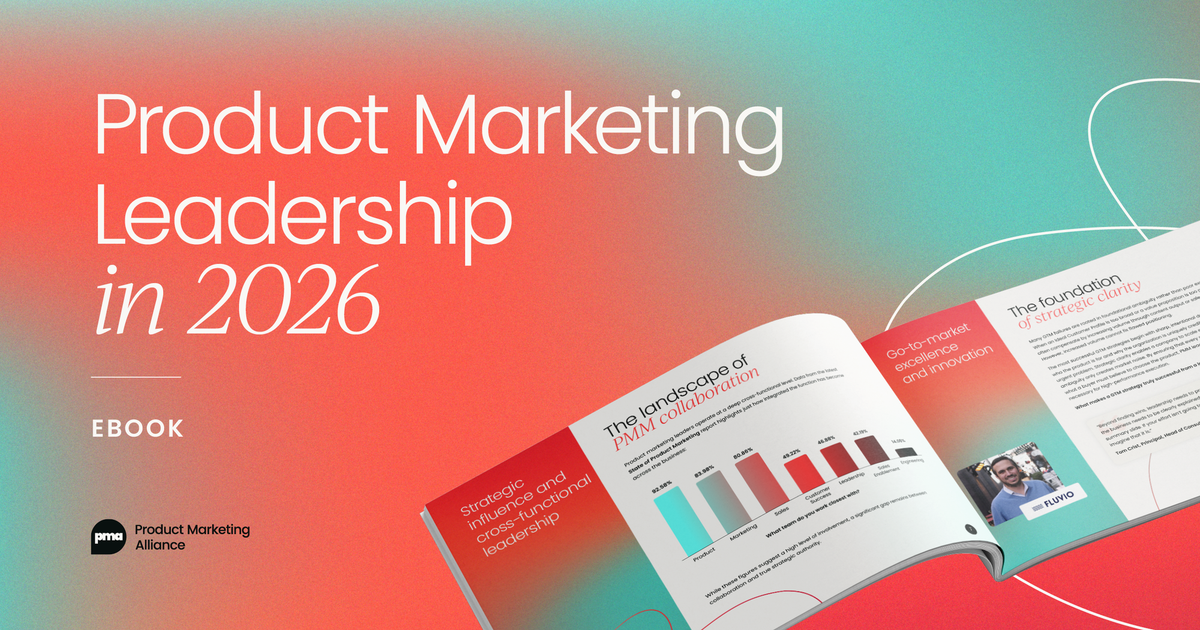
A function that’s earned its seat
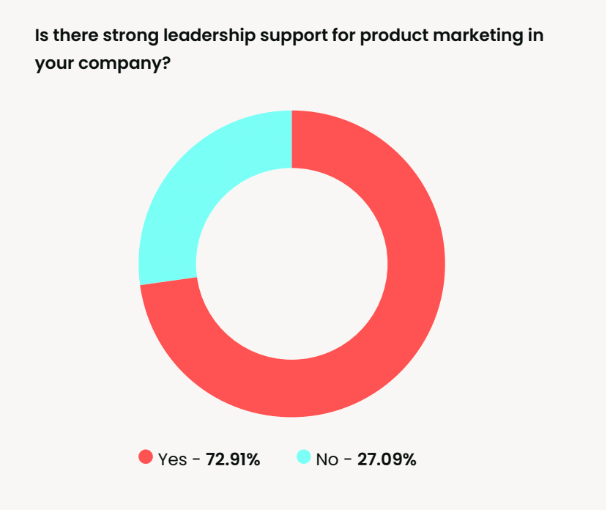
The good news for product marketers is that the internal credibility battle is largely won. Around three-quarters of PMM leaders now report strong leadership support within their companies, a sign that the function has moved well beyond fighting for recognition.
The harder reality is that recognition and progression aren’t the same thing. While 40% of PMM leaders want to move up the ladder at their current company over the next twelve months, more than a third are actively looking to change employers. Only one in five intend to stay put.
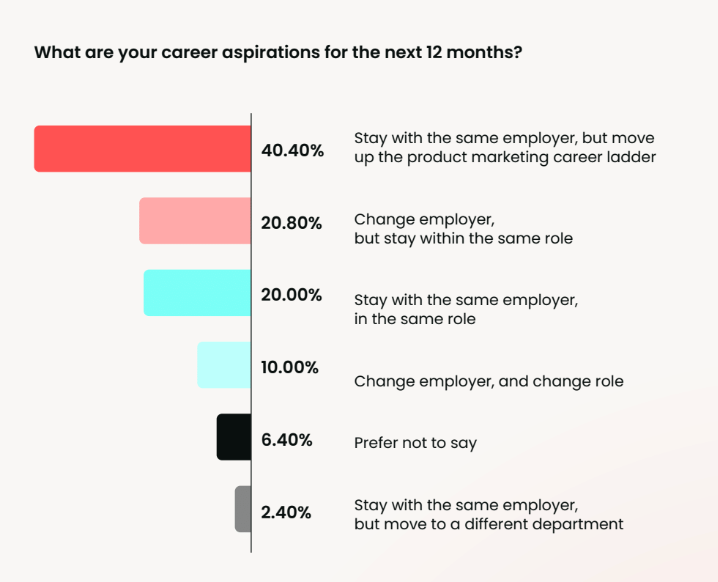
The PMM community, as a whole, knows its own worth and is willing to move to find an environment that matches it.
The four paths forward
Chief of Staff and strategic roles
For senior product marketers who’ve spent years synthesizing information across product, sales, marketing, and customer success, the Chief of Staff role is a natural landing spot.
Tom Crist, Principal and Head of Consulting Practice at Fluvio, puts it plainly: “A trusted product marketer who exposes gaps in the market, drives product-market fit, and identifies expansion opportunities has earned the potential for these critical roles.”
It’s not hard to see why. A Chief of Staff needs to communicate with clarity across functions, help senior leadership make faster and more informed decisions, and manage competing priorities without losing sight of the overall goal.
That’s a description that most effective PMMs would recognize as a normal Tuesday.
The CMO path
For those whose instincts run toward brand, narrative, and the full customer journey, the Chief Marketing Officer role represents a genuine, if ambitious, evolution.
Erin Stephan, Head of Product Marketing at Aqua Security, describes this as one of several distinct directions available: “Some PMM leaders naturally progress toward the CMO role, particularly those who are more content-driven and have deep experience shaping narrative, brand, and demand strategy.”
What sets a PMM-turned-CMO apart from someone who rose through demand generation or brand alone is their grounding in the product itself.
A CMO who understands exactly what problem the product solves (and why customers choose it over alternatives) makes marketing decisions that hold up to scrutiny from both customers and the board.
Product leadership
On the other end of the spectrum, PMMs with stronger technical instincts often find themselves gravitating toward VP of Product or Chief Product Officer.
As Erin Stephan notes, “their ability to balance customer needs, market dynamics, and product strategy translates well into owning the product roadmap and long-term vision.”
The transition makes intuitive sense. PMMs who have spent years influencing the roadmap from the outside are often better prepared than they realize to own it from the inside, and they bring something many product leaders lack: a deeply external perspective, shaped by years of listening to customers and watching competitors.
Fractional and advisory work
Perhaps the most significant structural shift in how experienced PMMs are deploying their skills is the rise of fractional and advisory roles. Rather than joining a single company full-time, senior practitioners are increasingly working across multiple organizations simultaneously.
Erin Stephan describes the opportunity clearly: “Product marketing is both an art and a science, and many organizations lack this capability in-house. Fractional and advisory models allow experienced PMMs to apply proven frameworks across multiple companies, helping teams build clarity, focus, and stronger go-to-market execution without the overhead of a full-time hire.”
For the PMM, it offers variety, autonomy, and compounding impact across industries. For the companies they serve (particularly early-stage businesses still figuring out their go-to-market motion), it offers access to senior strategic thinking that would otherwise be out of reach.
The hub-and-spoke advantage
What makes all of these paths plausible is a structural feature of the PMM role itself: it touches everything.
Katie Miller, Developer Marketing Advisor, frames it as a hub-and-spoke model: “Since PMM is such a cross-functional role, a successful leader has the general leadership experience to effectively pivot into many of the ‘spokes’ with whom they’re connected – product management, operations, program management, or other marketing functions.”
Every collaboration with a product manager, every sales enablement cycle, every cross-functional launch is also an education in how those adjacent functions work. A senior PMM who has spent years at the centre of that web hasn’t just learned product marketing. They’ve learned the business.
The shift toward soft skills
The technical foundations of the role remain important, but they’re rarely what drives advancement at the executive level. The leaders who make the leap tend to be the ones who’ve developed a different set of capabilities alongside the craft.
Executive communication is at the top of the list.
Erin Stephan points to technology fluency and AI as increasingly non-negotiable, alongside executive presence: “PMM leaders must be able to have executive-level conversations, clearly articulate how product marketing ties to business outcomes, and influence decisions across the organization with confidence.”
Tom Crist emphasizes the internal selling dimension: “As you advance, your ability to sell internally must rise as well. Bring in other leaders to iterate on your ideas before they ever see a final leadership group for approval, and you’ll find that you’ve created both alignment and advocates.”
Amit Alagh, Head of Product Marketing at RWS, takes a more personal view, pointing to the skills that are most often missing when PMMs struggle as managers: “The best leaders I have worked with want to hire people better than themselves. Key skills for PMM leaders are self-awareness, empathy, and passion for developing others.”
The compensation question
Salary is the primary factor in career decisions for roughly 38% of PMM leaders – slightly more than those who rank company culture first. The community is almost evenly split on whether their pay reflects their actual contribution: just over half believe it does.
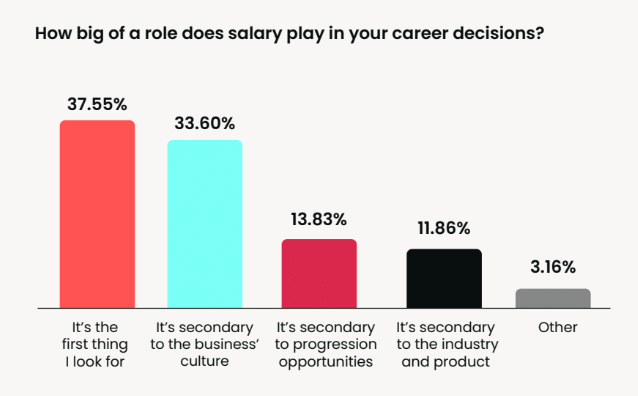
That gap typically comes down to how well a leader connects their work to commercial outcomes. When product marketing is perceived as tactical, compensation ceilings tend to arrive quickly. When a leader ties their contributions directly to revenue growth, pricing strategy, and roadmap influence, the conversation changes.
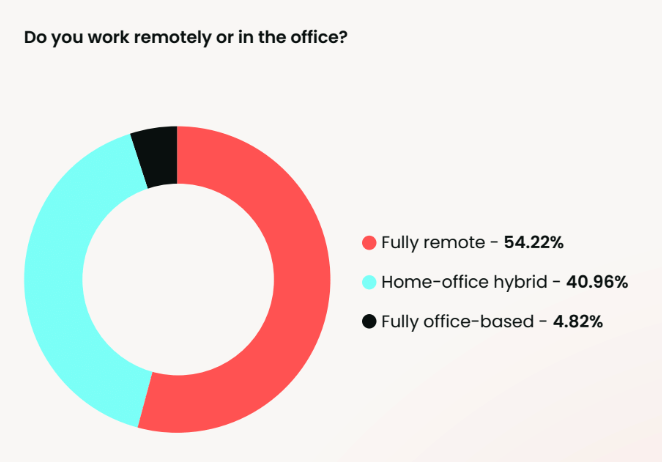
Flexibility has become an equally important part of the picture. More than half of PMM leaders now work fully remotely, with another 40% in hybrid arrangements. The ability to design work around life, rather than the reverse, has become less of a perk and more of an expectation.
Choosing the right path
The diversity of directions available to senior product marketers is ultimately a reflection of the role’s strategic breadth.
The destination could be Chief of Staff position, the CMO chair, product leadership, or a portfolio of fractional engagements; the foundation is the same: years of building fluency in customers, markets, and products create a platform that transfers to an unusually wide range of leadership contexts.
The PMMs who make the most successful transitions tend to be those who know not just what they’re capable of, but what they’re genuinely drawn to.
Clarity about that, and a willingness to pursue it deliberately, rather than waiting for tenure to do the work, is what separates the leaders who define their next chapter from those who stumble into it.


