
I’ve inherited product marketing teams six times now. Six different companies, six different starting points, six completely different sets of expectations.
Some of those companies were enterprises with hundreds of people, established HR processes, and proper management tracks. Others were 70-person startups where you figure things out as you go. Since the end of 2025, I’ve been at Nasuni, which sits somewhere in the middle with close to 700 people.
Each time I’ve stepped into a new PMM leadership role, the context has been different, but one thing has stayed consistent:
If you don’t define what product marketing means at your company, everyone else will do it for you.
That’s the core of what I want to share here. Not a framework you can copy-paste. More of a way of thinking about those first 100 days (or first year, honestly) that’ll help you put your stamp on the function before the function puts its stamp on you.
The trap most PMM leaders fall into
When you first join a company, the instinct is to observe. You want to understand how things work, what the team is doing, how you should structure things based on what you find. It feels like the sensible, humble approach.
In my experience, it’s the wrong one.
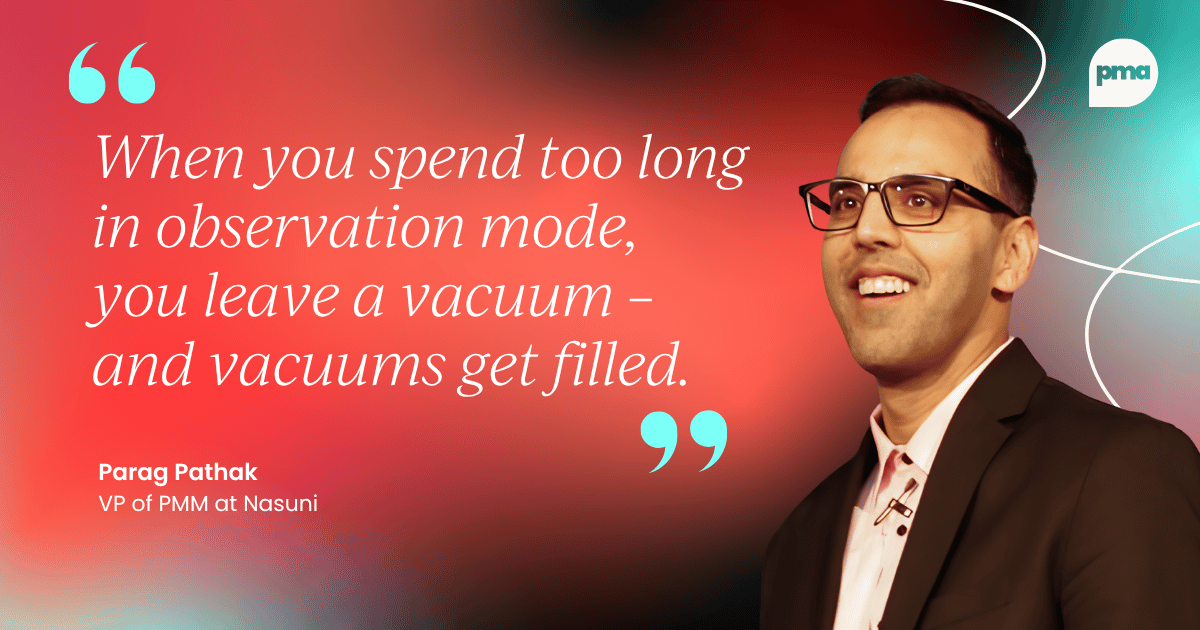
When you spend too long in observation mode, you leave a vacuum – and vacuums get filled. Other functions start defining what PMM is. Sales starts treating you like a slide deck service. Product starts treating you like a launch coordinator.
Suddenly, your team is buried in tactical work with no clear tie to company-level OKRs, no strategic voice, and no real identity beyond “the people who make things pretty.”
I saw this when I joined Nasuni. A lot of tactical activity was happening, but the connections to broader business outcomes weren’t there. People across the company thought of PMM as a subset of general marketing.
I get that. The work we do touches everything: go-to-market strategy, sales enablement, competitive intelligence, messaging, positioning, analyst relations, customer conversations, and more. Because we touch so many functions, everyone feels like they have a stake in it. Everyone wants to weigh in.
That’s not inherently a bad thing. The feedback can be valuable, but you have to take that input, filter it, and build it into a framework that works for your team and your company. If you’re not doing that, someone else is.
For expert insights like this, in full, every Friday, sign up for Pro+ membership.
You’ll also get access to 30+ certifications, a complimentary Summit ticket every year, and 130+ product marketing templates.
So, what are you waiting for?
What “defining the function” actually means
Defining the product marketing function isn’t about writing a manifesto or sending a company-wide email about what PMM does. It’s subtler than that, and more practical.
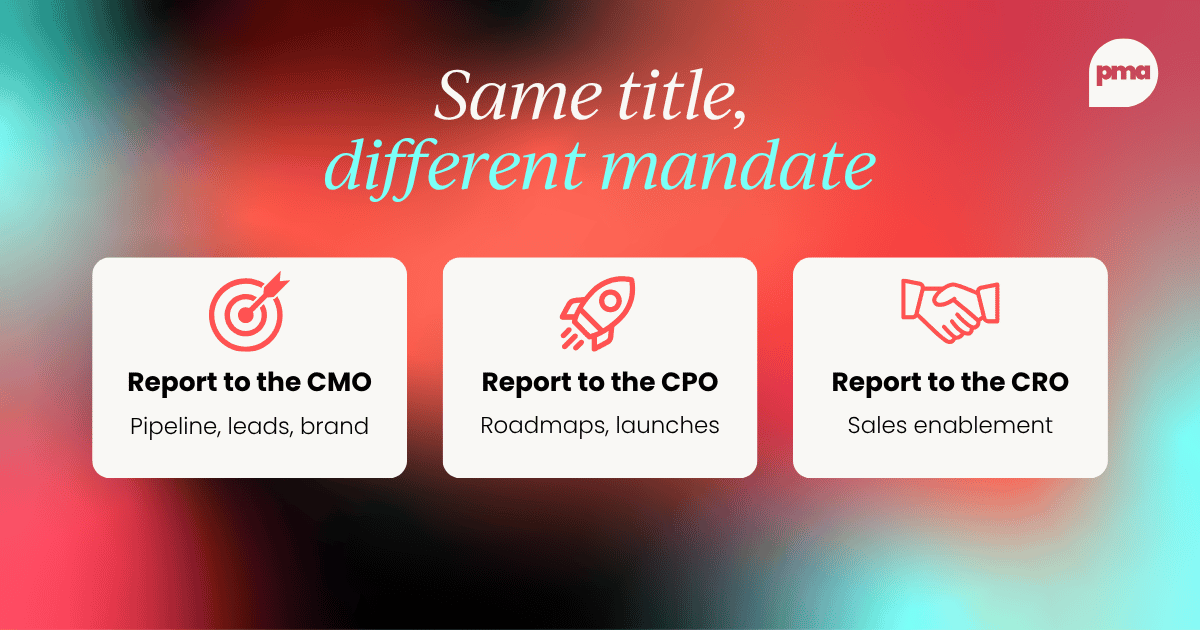
It starts with understanding your reporting line because where you sit in the org changes your mandate:
- If you’re reporting to the CMO, your world is shaped by pipeline, leads, and brand.
- If you’re reporting to the CPO, you’re living closer to product launches and roadmaps.
- If you’re aligned to the CRO, sales enablement becomes your north star.
I’ve reported into all three at different points in my career, and each time, the way I thought about the function shifted.
None of those reporting structures is better or worse than the others. What matters is that you understand the lens you’re working through, and that you use it intentionally rather than just inheriting the assumptions that came with the role before you.
Changing behaviors
The second part of defining the function is changing the conversation from “this is how we’ve always done it” to “this is how we should do it now.”
That shift sounds simple, but it isn’t. People are attached to old behaviors, especially when those behaviors used to work. The only way to move them is to prove value, not just assert it.
Can you take a roadmap that only product managers can present and translate it into something a seller can use in a prospect conversation? Can you turn insights from a user group into something the whole company can feel and act on? Can you build sales plays that actually change how deals are run?
These are the moments that build credibility. And credibility is what permits you to keep defining the function on your terms.
The four things to focus on in your first 100 days as a PMM leader
When I think about my time so far at Nasuni, and just about every leadership role I’ve held before it, four themes keep coming up:
- Culture
- Team
- Agility
- Value
Think of these as lenses to view your impact through – ways of checking whether your team’s work is moving things in the right direction.
1. Culture is the first artifact you ship
Culture is the element people underestimate most.


