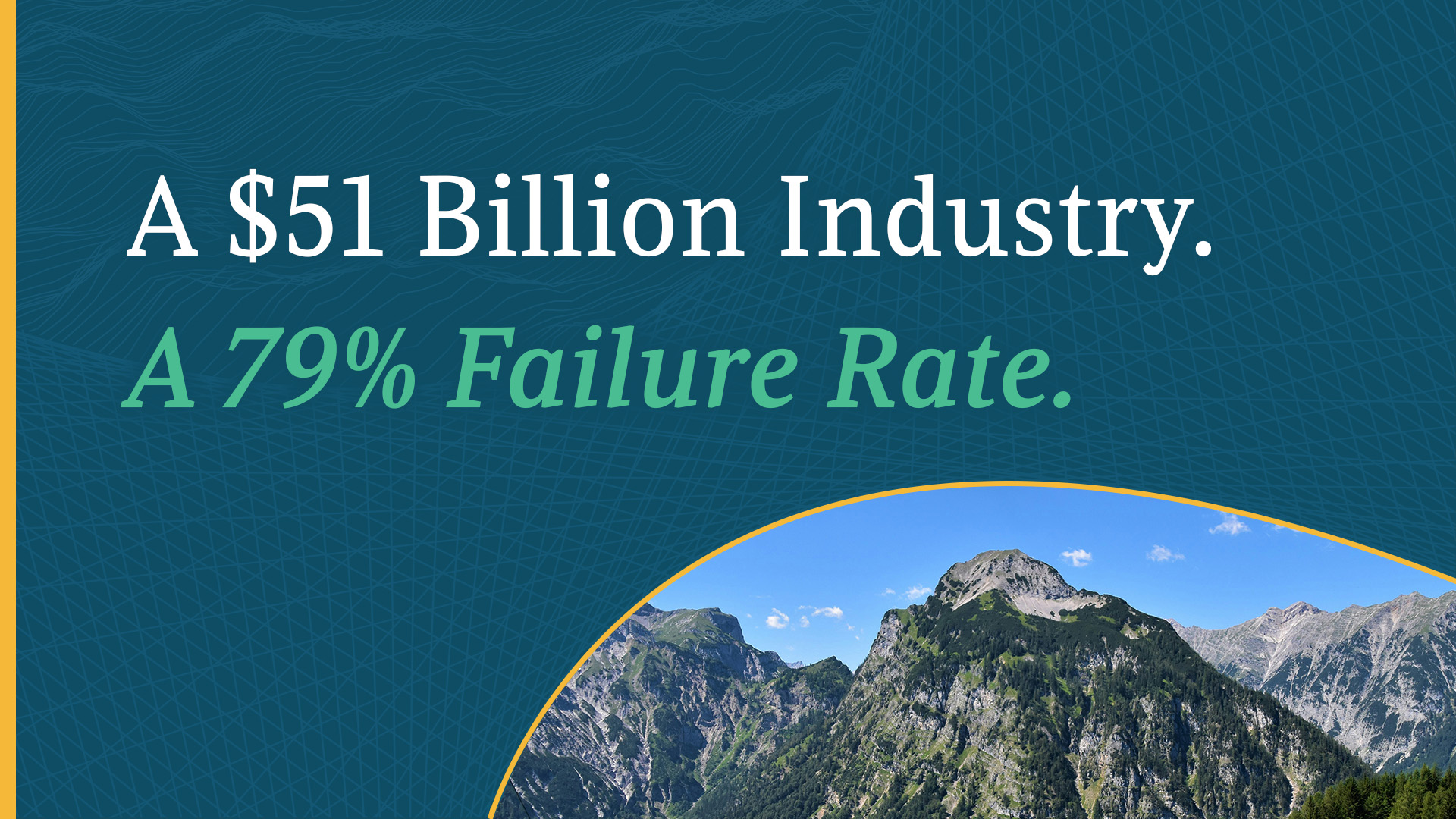
Application modernization continues to be at the forefront of organizations’ concerns as they struggle to respond to the undeniable acceleration of digital transformation and the ability to respond to rapid changes in the market. According to an October 2025 MarketsandMarkets [1] research report, spending on legacy application modernization is expected to grow from $22.67 billion in 2025 to $51.45 billion in 2031. With the increasing investment in application modernization, it is rather astonishing that research conducted by Wakefield Research [2] showed that 79% of the respondents indicated that their application modernization effort failed. How do organizations know that they are wasting billions of dollars on app modernization, and how do they stop the bleed?
In Examining Capabilities-Driven AI, my colleague Len Greski discussed the impact of a capabilities-driven organization on the AI-enabled business. He asserted that a capabilities-driven approach to AI accelerates the delivery of data products and AI capabilities. In Organizing Around Business Capabilities, we articulated the benefits of this approach, including integrating both technical and business operations into a capability. In this article, I explore how the benefits of a capabilities-driven organization enable organizations to make economically sound investment decisions in application modernization.
Organizations Must Modernize
With market spend expected to exceed $51 billion in 5 years and growing at 5x the 2025 U.S. inflation rate, modernization is clearly a strategic imperative. Four primary drivers of this investment consistently emerge across industries:
1. Unsustainable Technical Debt and Maintenance Costs
Legacy systems accumulate technical debt gradually over time, consuming an ever-growing share of IT budgets just to keep existing systems operational. Surprisingly, once a new application goes into production, it IS a legacy application. This translates into 90% of the cost of your new application occurring after the initial deployment to production [3]. As years pass and original developers move on, even seemingly simple updates become complicated and risky. Tasks that in the past took days can drag on for months. This constant struggle not only drains resources, but it also directly undermines an organization’s competitiveness.
2. Inability to Scale and Adapt to Market Changes
Monolithic and tightly coupled legacy architectures make it difficult to introduce new products, enter new markets, or respond to competitive threats at the pace the modern business environment demands. Organizations with outdated platforms find that their technology constrains rather than enables the business. Meanwhile, competitors who have modernized can quickly try out new ideas and grow their services with ease. The longer you wait to modernize, the further behind your organization falls.
3. Escalating Security and Compliance Risk
Many older systems simply cannot keep up with today’s security threats. It is often difficult, if not impossible, to update them with the latest protections or to comply with new rules like GDPR, HIPAA, SOC 2, and PCI-DSS. The fallout from a security breach or failing an audit can do way more damage to an organization’s revenue than the upfront investment to modernize. Security isn’t just an IT problem anymore; it’s a business risk that leadership can’t afford to ignore.
4. Degraded User and Customer Experience
Legacy systems typically produce slow, fragile, and poorly integrated experiences for both internal users and external customers. In an era where customer experience is a primary differentiator, organizations running on outdated platforms find it increasingly difficult to meet expectations. On top of poor customer experience, productivity and morale of employees are negatively affected in part due to outdated tools and processes, making it harder to recruit and keep top talent.
Most Modernization Efforts Fail
The 79% failure rate cited by Wakefield Research is disconcerting, but it is not surprising when one examines how most modernization programs are structured. The most common failure modes include:
- Technology-led, not outcome-led: Too often, organizations start with a technology decision ‘we are moving to the cloud’ or ‘we are rewriting in microservices’ ignoring the most important question, what is the business value and what business outcomes the investment is meant to deliver. Without a clear tie to business value, projects lose stakeholder support and direction.
- Boiling the ocean: Organizations attempt to modernize everything at once, resulting in multi-year programs that are too complex to govern, too expensive to sustain, and too slow to deliver value. By the time they complete, the business and market has moved on.
- Siloed execution: Technology teams modernize applications in isolation, without sufficient understanding of upstream and downstream business dependencies. This is the ‘bowl of spaghetti’ problem — pulling one noodle breaks four others — and it leads to regressions, delays, and costly rework.
- Neglecting the organizational dimension: Technology transformation without corresponding changes to team structures, processes, and governance rarely sticks. Conway’s Law tells us that systems mirror the communication structures of the organizations that build them, and if we change the software to conflict with the communication structure, the changes will eventually be reverted.
- Lack of prioritization frameworks: Without a structured way to evaluate which systems to modernize and in what order, organizations default to the loudest voice in the room, the most visible pain point, or political priorities ignoring the strategic value.
As an antidote to the failure patterns, consider a capabilities-driven approach. Use the organization business capabilities to anchor the modernization decisions to the most valuable business outcomes ensuring cross-functional alignment and enabling prioritized roadmap that based on valuable business outcomes and sustainable technical architecture.
How a Capabilities-Driven Approach Improves Success Rates
A capabilities-driven approach addresses the root causes of modernization failure by shifting the conversation from technology replacement to business outcome enablement. Rather than asking ‘what do we need to rebuild?’, it asks ‘what capabilities do we need to perform better — and which of those are truly differentiating?’ This reframing has profound implications for how programs are structured, governed, and executed.
Anchoring Decisions to Business Value
Nicholas Tune and Jean-Georges Perrin point out that ‘to get buy-in from stakeholders and maximize return on investment, you must have a solid understanding of the business outcomes you aim to achieve and clearly articulate how investing in architecture modernization will move the business toward its strategic priorities.’ [4] A capabilities framework provides exactly this — a structured language for connecting technology investment to strategic intent, ensuring that modernization efforts remain legible and defensible to executive stakeholders throughout the program lifecycle, including the cost to operate the capability.
Enabling Value Driven Prioritized Roadmap
Not all modernization investments are equal, and not all capabilities deserve the same level of investment. Martin Fowler describes how to determine whether IT is strategic or utility: IT is strategic if it contributes to or supports capabilities that differentiate the organization. [4] This insight, combined with the business capability stratification model [5] provides a powerful framework for prioritization.
- Strategic – direction setting or typical executive focal points
- Core – customer facing or what an organization does to thrive in the marketplace
- Supporting – what the organization must have to function as a business
Organizations that apply this lens can make confident decisions: invest heavily in modernizing Strategic and Core capabilities where performance gaps exist, and adopt pragmatic, cost-efficient approaches for Supporting capabilities where “good enough” is genuinely good enough. This avoids the costly trap of gold-plating commodity systems while under-investing in differentiated ones.
Reducing Risk Through Incremental Delivery
By identifying capability boundaries and aligning domains accordingly, organizations can decompose large, risky modernization programs into smaller, independently deliverable increments. Each increment delivers measurable business value, maintains organizational support, and reduces the blast radius of any individual failure. This is the opposite of the ‘big bang’ rewrite, and it is why capability-aligned approaches consistently outperform technology-first ones.
The Path Forward
A capabilities-driven approach to application modernization is not a silver bullet, but it is a proven antidote to the failure patterns that have plagued the industry. When organizations use business value to anchor their investment decisions, apply roadmap prioritization, and deliver incrementally, they can break the cycle of costly, failed transformations. The question is no longer whether to modernize; the competitive imperatives are clear, but how to modernize in a way that is economically sound and strategically aligned. In part 2 – Capabilities-Driven Application Modernization Delivery: Business Value at Every Step, we will move from framework to practice: exploring the concrete steps organizations can take to implement a capabilities-driven modernization program and deliver measurable results.
This article was originally published in Architecture & Governance Magazine in May 2026.
References
[1] Application Modernization Services by Service Type (Cloud Application Migration, Applications Re-Platforming, Post Modernization), Application Type (Legacy, Cloud-hosted, Cloud-native) – Global Forecast to 2031. Retrieved March 2, 2026. [2] Wakefield Research. (n.d.). Why app modernization projects fail. vFunction. https://vfunction.com/resources/report-wakefield-why-app-modernization-projects-fail/ [3] Tornhill, Adam. Your Code as a Crime Scene: Use Forensic Techniques to Arrest Defects, Bottlenecks, and Bad Design in Your Programs. Pragmatic Bookshelf, 2nd ed, 2024 [4] Evans, Eric. Domain-Driven Design: Tackling Complexity in the Heart of Software. Addison-Wesley Professional, 2003. [5] Business Architecture Guild®, A Guide to the Business Architecture Body of Knowledge®, v 13.0 (BIZBOK® Guide), 2024. Part 2, Section 2.2 & Page 79