Project managers are always looking for better ways to engage teams without making meetings feel like … well … meetings.
One surprisingly effective tool? Movie clips.
A well-chosen scene can instantly create emotional connection, spark discussion, and make project lessons memorable in ways another slide deck never will. The trick is using the right clip at the right moment in the project lifecycle.
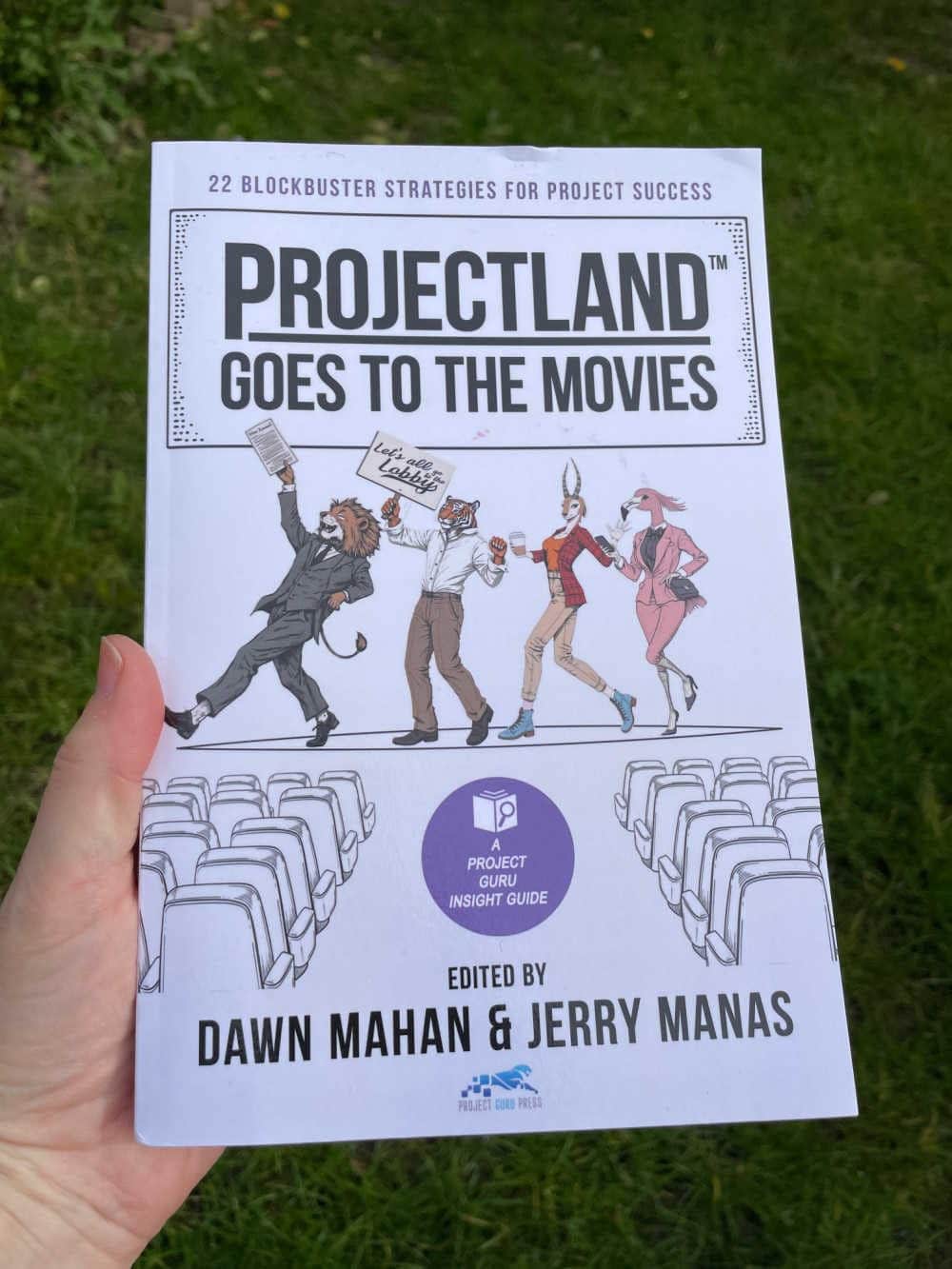
In Projectland Goes to the Movies, we explored how films can help project professionals tackle everything from risk management to leadership and collaboration. Rather than just entertaining metaphors, these movies are practical facilitation tools project managers can use throughout delivery.
Here are five ways to bring movie moments into your projects, from kickoff to lessons learned.
1. Kickoff meetings
Use: The Great Escape
Most kickoff meetings overload people with details, timelines, and governance charts. The best kickoff meetings do something much more important first: they create belief.
That’s exactly what happens in The Great Escape.
In the movie, the prisoners’ first planning meeting establishes confidence, clarity, and commitment long before the actual escape begins. Despite impossible odds, the team leaves believing success is possible.
That’s the real job of a kickoff meeting.
As the book explains:
“A great kickoff meeting begins to create a ‘can do’ spirit for your project team, no matter how toxic the rest of the organization is.”
Try this with your team:
- Show a short clip from the film’s planning meeting
- Ask: “What made people believe this mission could work?”
- Discuss:
- clarity of roles
- confidence in leadership
- shared commitment
- preparation versus perfection.
One of the strongest insights from the chapter, written by Dr. Mark Kozak-Holland, is this:
“An inspired and motivated team will work proactively to overcome challenges.”
That’s exactly the mindset a kickoff should create.
2. Creating shared purpose
Use: The Lord of the Rings: Fellowship of the Ring
Projects fail when teams act like disconnected departments instead of a team moving toward the same goal.
In the movie, the “Fellowship” works because every member contributes different strengths toward one shared and dangerous mission that no one could possibly undertake alone: getting the One Ring to Mordor to destroy it.
That’s a powerful conversation starter for cross-functional teams.
The chapter’s central insight is especially relevant for modern project work:
“The team is everything.”
The chapter, written by Michael Schafer and Rachel Mussell, features a scene where Frodo accepts the job of taking the ring to Mordor, and the rest of the team commits to joining, thus forming the fellowship. This particular scene is a fantastic clip to use:
- during project launch
- after organizational changes
- when new team members join
- when silos start appearing.
Ask your team:
- What is our shared purpose in your own words?
- What unique strengths does each person bring?
- Are we protecting critical contributors from unnecessary distractions?
- Does everyone understand how their work contributes to the larger mission?
Movie moments like this help teams emotionally reconnect to purpose, especially during long or difficult initiatives.

3. Problem-solving sessions (before the crisis happens)
Use: Apollo 13
Most teams wait until a crisis hits before discussing how they’ll solve problems together.
Apollo 13, highlighted in a chapter by Dr. Mike Clayton, gives project managers a much better approach. The famous “square peg in a round hole” sequence demonstrates structured problem-solving under pressure:
- clear leadership
- focused communication
- rapid collaboration
- disciplined thinking.
And perhaps one of the best crisis response lines in cinema:
“Let’s work the problem people. Let’s not make things worse by guessing.”
This clip works brilliantly before major milestones, cutovers, launches, or high-risk phases. Instead of reviewing another risk register, use the clip to facilitate discussion around:
- how problems will be escalated
- who makes final decisions
- how teams communicate during pressure
- what “good problem solving” looks like.
The chapter highlights four keys to success:
- Culture
- Attitude
- Leadership
- Process
That framework alone can anchor an entire masterclass.
One especially practical takeaway from the chapter:
“The right team to solve a problem has people with a range of relevant skills, the trust to listen to each other and test ideas, and a focus on the details that matter.”
That’s a far more useful conversation than simply asking, “Any risks?”
4. Staying aligned when the project is moving at warp speed
Use: Top Gun
When projects accelerate, communication often gets worse instead of better.
People overshare.
Meetings get longer.
Important information gets buried.
Teams stop listening.
Mavericks steamroll people.
That’s why Top Gun carries such useful project leadership lessons.
The chapter, written by Dave Lozinger, a former fighter pilot, focuses heavily on communication discipline under pressure. Fighter crews succeed because communication is:
- clear
- concise
- timely
- purposeful.
The author also shares a fantastic coaching insight from his work as a Navy flight instructor:
“The best communicators are succinct and unambiguous.”
The clip he discusses from the Top Gun team’s first dogfight mission is ideal to share when:
- just before projects enter delivery crunch mode
- stakeholders are overwhelmed
- priorities are shifting rapidly
- teams are drowning in meetings and status updates.
One of the most practical communication lessons from the chapter is this:
“Concentrate on the WHAT, not the HOW.”
That single idea can dramatically improve alignment in fast-moving projects. Try using the clip before a standup or leadership sync and ask:
- Are we communicating clearly and succinctly enough?
- Are we overcomplicating updates?
- Does everyone understand the mission?
- Are we focusing on outcomes or micromanaging implementation?
- How well are we working together under pressure?
Sometimes teams don’t need more communication. They need sharper communication.
5. Lessons learned & retrospectives
Use: The Martian
Retrospectives often focus too heavily on what went wrong and not enough on how teams adapted. That’s why The Martian works so well for lessons learned sessions.
Mark Watney survives because he continually:
- tests
- learns
- adapts
- iterates
- keeps moving.
The chapter’s hot take captures this perfectly:
“When conditions change, address what’s in front of you, learn quickly, and keep progressing one problem at a time.”
This movie is especially useful after:
- difficult delivery phases
- unexpected pivots
- failed approaches
- crisis recoveries
- innovation projects.
The chapter, written by James Evans, outlines several Agile-style lessons teams can reflect on together:
- Fail fast, learn faster
- Break problems down
- Use what you’ve got
- Expect things to go wrong
- Stay mission-focused, not ego-focused.
And honestly, every project team eventually reaches a moment where this line feels painfully relatable:
“I’m going to have to science the sh*t out of this.”
What makes this film so powerful in retrospectives is that it normalizes adaptation. Throughout the film, the goal for Mark Watney isn’t perfection; it’s progress.
As the chapter reminds us:
“You don’t need to be a rocket scientist to lead like one. You just need to be curious, calm under pressure, and committed to moving forward, one brave, practical step at a time.”
Final credits
Projects are emotional journeys as much as operational ones.
People remember stories. They remember scenes. They remember how something made them feel long after they forget the contents of a status report.
That’s why movie clips can become surprisingly effective leadership tools for project managers. They create shared language, emotional connection, and memorable learning moments that teams carry forward into real work.
Because isn’t it grand when a two-minute movie scene can accomplish more than a 42-slide deck ever could?
About the article authors & co-editors of Projectland Goes to the Movies
Dawn Mahan is the founder of PMOtraining, LLC, and coined the term, Projectland®. She is a dynamic international speaker, award-winning project management consultant, and author of the Amazon #1 bestselling book, Meet the Players in Projectland: Decide the Right Project Roles & Get People On Board. Visit her website at PMOtraining.com.

Jerry Manas is an internationally bestselling author, speaker, and consultant specializing in resource management and workforce effectiveness. His work—including Napoleon on Project Management and The Resource Management and Capacity Planning Handbook—has been cited by business leaders such as Tom Peters and Orlando Magic Senior VP Pat Williams. Visit his website at jerrymanas.com.

Featured chapters referenced in this article
The movie-inspired project leadership insights featured in this article are drawn from the following chapters in Projectland Goes to the Movies:
- Start on the Right Foot — How to Kick Off Your Project with Timeless Strategies (The Great Escape) by Dr. Mark Kozak-Holland
- Teamwork and Trust in Middle-earth — Building Your Project Fellowship (The Lord of the Rings: Fellowship of the Ring) by Rachel Mussell and Michael Schafer
- “Let’s Work the Problem, People” — How to Respond When Everything Seems Lost (Apollo 13) by Dr. Mike Clayton
- Check Your Six! — Maintaining Team Performance Under Pressure (Top Gun) by Dave Lozinger
- Fail Fast. Learn Faster. Lead Smarter. — How an Agile Astronaut Iterated His Way Home (The Martian) by James Evans
Projectland Goes to the Movies: 22 Blockbuster Strategies for Project Success (2026 Amazon Hot New Release) is available globally.
Visit https://books2read.com/projectlandgoestothemovies for links to your favorite book store.
This article first appeared on Rebel’s Guide to Project Management and can be read here: 5 Ways project managers can use movie clips to engage their teams