For most of its history, GTM was a backstage function: segmentation, pipeline, enablement, partner onboarding, campaign orchestration. Leaders appeared in carefully prepared environments, and employees operated as largely invisible executors.
That architecture is breaking. Between 2024 and 2025, three forces converged.
- Buyers moved decisively toward self-directed research.
- Executives were pulled into permanent public visibility.
- Revenue results started to correlate more closely with ecosystem position than with isolated campaign excellence.
The result is a different GTM reality. Expertise that is not visible is treated as uncertain. Leadership that does not interpret publicly feels absent. Companies that do not sit inside strong digital ecosystems struggle to compound growth, even if the product is good.
This is not a cosmetic change in communication style. It is a structural change in how trust, attention, and revenue move through markets.
Buyers now live upstream from your funnel
The old assumption was that the buyer journey started when a lead entered your system. By now, that is clearly false.
A Gartner sales survey published in June 2025 found that 61% of B2B buyers prefer a rep-free buying experience and 73% actively avoid suppliers sending irrelevant outreach. The important part is not the rep-free headline. The important part is what it implies.
Buyers assemble their view of a category long before a first meeting. They learn from creator content, peer posts, niche communities, and product teardown threads. When they finally talk to a vendor, they are not looking for information in the abstract. They are testing whether the vendor’s internal reality matches the external narrative they have already constructed.
In other words, the decision is made upstream. GTM that assumes the conversation starts with outbound is already late.
Leadership as a credibility layer
The current environment reshapes the function of leadership. Silence, once interpreted as discipline and focus, is now interpreted as the absence of perspective. Executives no longer have the option to remain abstract figures. They are pulled into the open and expected to think in public with structure and continuity.
You see it in how founders and revenue leaders now use event stages, long-form commentary, and podcasts not to promote features, but to expose the logic behind their decisions.
The strongest ones do not sell the product. They articulate the constraints they operate under, the segments they intentionally ignore, and the broader context that shapes their choices.
This shift toward public reasoning is happening for a simple reason. Trust no longer lives inside the sales cycle. In the past, the burden of trust building fell almost entirely on individual sales representatives. Buyers evaluated the person in front of them. The leadership layer stayed invisible.
Today, the burden is distributed across the entire organization. Every public-facing individual becomes a contributor to or a liability for the brand’s credibility. If one person speaks in a way that contradicts the broader logic of the company, it creates immediate doubt about internal alignment and decision quality.
The asymmetry is more visible in smaller companies. Large enterprises operate with long-term planning cycles, established forecasting systems, and enough data to control narrative consistency across teams. Their public units move within clear parameters. Early-stage companies do not have that luxury.
Breaking into new markets without legacy trust forces every team member to become part of the trust architecture. With fewer resources, less historical data, and limited pattern recognition, the margin for error is narrower. A single misaligned message can distort how the entire organization is perceived.
This is not performance. It is a sorting mechanism. Teams, partners, and buyers calibrate their trust by observing how leadership reasons under real conditions. They are not only assessing the conclusions. They are assessing the quality of thought and the coherence of the system behind it.
In practice, trust is no longer built behind the scenes through controlled interactions. It emerges from a traceable sequence of decisions made in public and reinforced within the leader’s network. When there is no visible thinking to observe, the brand reads as hollow regardless of how refined the visuals or messaging may be.
The public employee and the personal brand problem
The same collapse of distance now applies to employees, especially in GTM.
A Deloitte Digital research piece showed that organizations using a formal RevOps model were 1.4 times as likely to exceed their 2023 revenue goals by at least 10%.
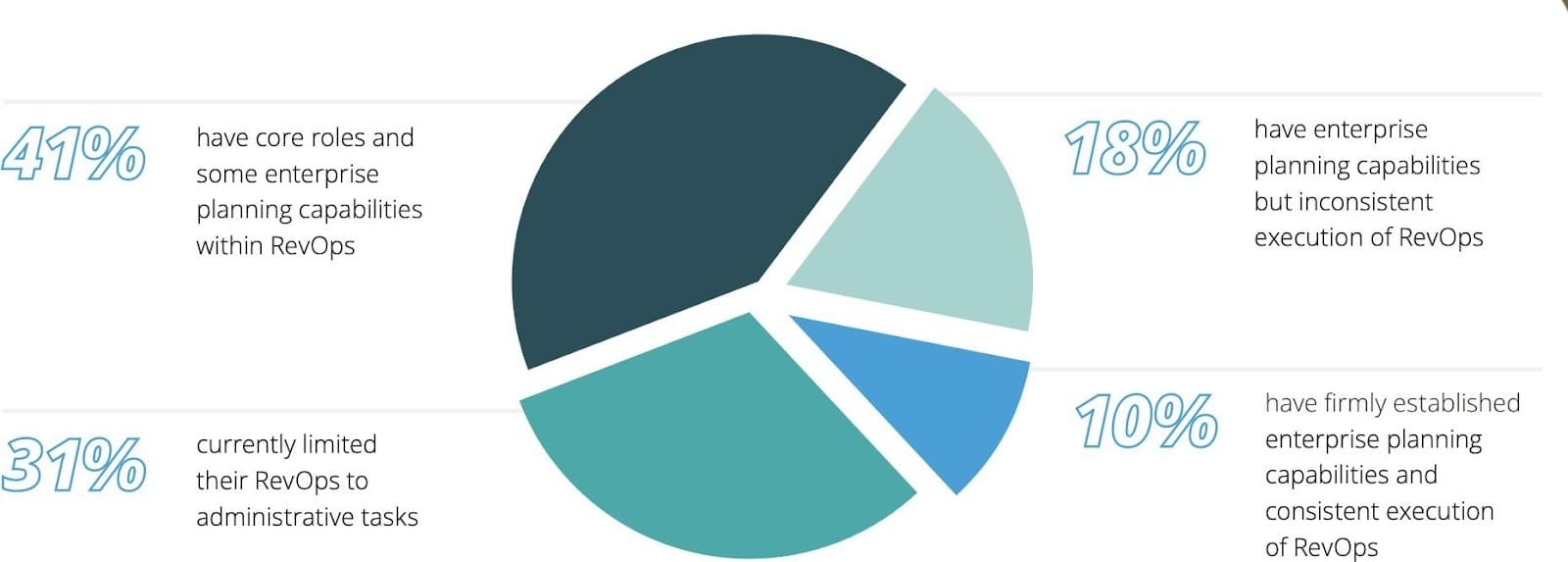
Most people quote that statistic to argue for RevOps structure. The more interesting implication is different. When you centralize revenue data and orchestrate across marketing, sales, success, and partners, you also see clearly which individuals carry disproportionate influence into the market.
Very often, those individuals are not only good operators. They are visible. Their posts drive inbound. Their commentary shapes partner perception. Their name on a call changes how seriously a conversation is taken.
This creates a tension that companies are not fully prepared for.
- They need employees to build visible expert brands because buyers trust an independent expert more than a logo.
- They also need to retain control over the narrative, the pipeline, and the risk profile of what is said.
If you lean too far into control, you suffocate the very voices that make the company legible to the market. If you lean too far into total freedom, you risk misalignment, compliance issues, and internal resentment when one person’s brand starts to feel bigger than the company’s.
The emerging equilibrium is subtle. The best GTM organizations give people a clear frame on what must stay private, then treat everything else as a canvas for thought leadership. They assume their best operators will be partially portable and design retention around depth of opportunity, not around gag orders.
GTM has become an ecosystem discipline, not just a pipeline discipline
If buyers decide upstream and people carry influence, the natural question is: where does growth really come from?
The 2024 Deloitte Digital work already pointed to RevOps as a structural multiplier. Parallel research on digital ecosystems shows a similar pattern from another angle.
A 2024 study in Review of Managerial Science examined how participation in a digital business ecosystem affects stakeholder satisfaction and business performance, concluding that firms embedded in strong ecosystems outperform those that try to operate in isolation.
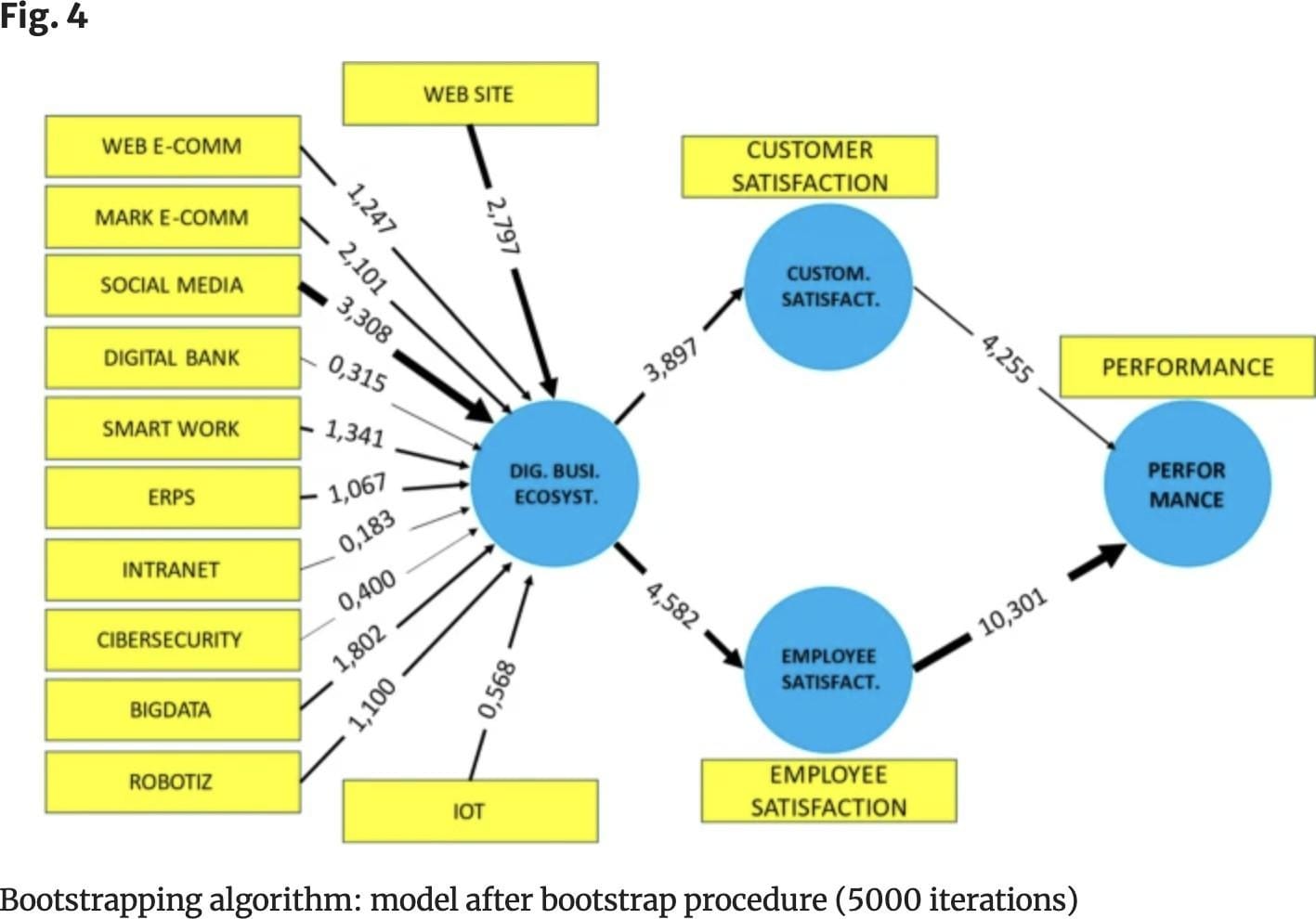
What this means in practice is that GTM is now about your position in the network as much as it is about your funnel mechanics.
Partnerships, co-selling, co-marketing, solution integrations, joint events, advisory roles, and cross investments are not side projects. These are ways to anchor yourself in the graph. Once that graph is dense around you, small moves generate outsized results. When it is sparse, even excellent tactics fail to compound.
The hard part is that ecosystems remember behavior.
If you treat partners as distribution channels rather than as actors with their own constraints, you get one campaign and then silence.
If you use NDAs as a way to trap people rather than protect mutual work, you may win a short-term advantage and lose a decade of introductions. If you show up in communities only when you need something, your presence is treated as spam, even if you are technically helpful.
Ecosystem-led GTM is less about big alliances and more about micro proof of value repeated over time. Introduce someone to a client without asking for credit. Share a hard truth early about a deal risk.
Pass on a partnership that would hurt your partner’s positioning, even though it would benefit you in the short term. These decisions are remembered. Over time, they create a form of network credit that no marketing budget can replicate.
The cost side: Cognitive and ethical load
The optimistic reading is that GTM is becoming more human and more transparent. The realistic reading is that GTM is becoming more demanding for humans inside it.
People are now asked to be:
- Operationally excellent.
- Publicly present across multiple channels.
- Politically fluent inside ecosystems.
- Ethically resilient in the face of short-term pressure.
That combination is rare; it also creates fatigue. There is a real risk that GTM turns into a permanent performance theatre where everyone is always on, and no one has time to think.
Companies that understand this will differentiate not by pushing harder, but by designing sane defaults. For example:
- Setting explicit limits on how much public content is expected from each role.
- Protecting blocks of deep work where no content, no calls, and no events are required.
- Investing in shared research and narrative assets so individuals do not have to improvise under pressure.
Ethics also need to be handled as a process, not as brand copy. If there is no internal clarity on what you will not do to hit a number, external narratives about trust and ecosystem alignment will eventually collapse under their own weight.
Conclusion
The future of GTM is not defined by one more channel or one more framework. It is defined by a different topology.
- Buyers decide upstream, often without you in the room.
- Leaders and GTM operators are judged by the quality of their public reasoning, not only their internal decks.
- Ecosystems, not individual companies, are becoming the real units of competition.
In that environment, the advantage belongs to teams that can do three things at the same time.
- They build visible, precise expert voices that the market can actually follow.
- They embed themselves in ecosystems where value and trust move faster than outbound sequences.
- They treat integrity, constraint, and sanity as part of their GTM design, not as a legal afterthought.
Everyone else will still be running campaigns. The ones who internalize this shift will be running the environment those campaigns have to live in.