We love sharing the accomplishments of the Google AI communities over the month. We appreciate all the hard work and dedication of our community members. Without further ado, here are the key highlights by products!
Agentic Development
Antigravity

Skills over System Prompts: Building an Anki Tutor with the Antigravity SDK by AI GDE Ertuğrul Demir (Türkiye) demonstrates the value of a modular approach to AI agent design by creating custom Python tools and reusable skill packages for an Anki flashcard tutor using Antigravity SDK.
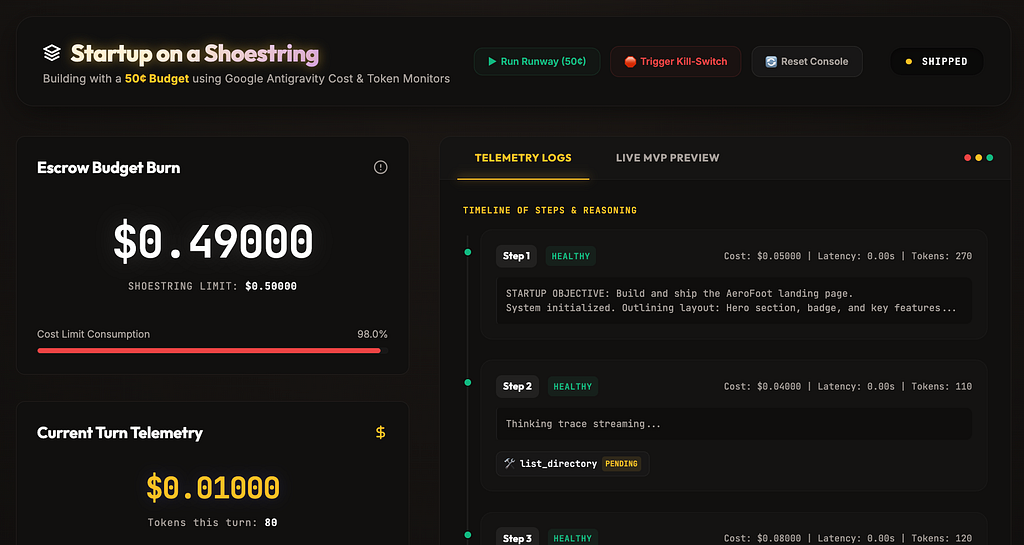
Startup on a Shoestring — Building with a 50¢ Budget using Google Antigravity Cost & Token Monitors💸 by AI GDE Jigyasa Grover (US) conducted an SDK-powered cost engineering experiment to observe an AI agent prioritize, panic, and ship an MVP landing page under intense budget pressure.
Google Antigravity CLI: Orchestrating Parallel AI Agents by AI GDE Aashi Dutt (India) explores how to create an interactive HTML dashboard from a raw CSV file with a single command and explains the benefits of the subagent architecture.
Configuring MCP Servers and Skills for Antigravity CLI and IDE by Cloud GDE Darren Lester (UK) provides a deep-dive guide on configuring MCP servers and agent skills for the new Antigravity CLI and IDE. He also shared Resolving WSL Friction with Google Antigravity: the Agy 2.0 and Agy IDE Edition discussing how to resolve friction between the Antigravity suite and the Windows Subsystem for Linux environment.
Google Antigravity 2 & Gemini 3.5 Flash: this AI duo changed my dev workflow… again by Web GDE Andrea Verlicchi (Italy) explains how the distraction-free chat interface and planning mode combine with the model’s speed and accuracy to create a powerful hybrid workspace for agent tasks, refactoring, and code modification.
Extending a MCP/A2A Currency Agent with AG-UI and Antigravity CL by AI GDE William McLean (US) aims to extend and test a currency Agent using A2A and MCP protocols with the AG-UI protocol for custom presentation.
Building blazing-Fast AI Mac OS App with Antigravity CLI by Cloud GDE Evan Lin (Taiwan) illustrates a multi-step traditional troubleshooting process and development workflow when an application encounters a crash and audio failure during testing.
Manage Your Worktrees With Antigravity 2.0 by Cloud GDE Jean-Philippe BACONNAIS (France) highlights how the integration of Git worktrees allows AI agents to work on multiple project tasks in parallel while effectively eliminating code conflicts.
Building the future with Antigravity 2.0 by AI Community Hyderabad was to learn Spec-Driven Development using Antigravity 2.0. They explored how to build end-to-end applications and explore real-world product showcases built entirely on Google AI tech stacks.
Codelabs for Antigravity
- [Codelab] Build a Multi-Language Code Auditor with Parallel Antigravity Agents by Cloud GDE Niels Buekers (Belgium) guides how to build an automated, multi-language code quality auditing and remediation system using parallel multi-agent orchestration in Antigravity 2.0.
- [Codelab] Ship a Parallel Developer Dashboard Release with Isolated Git Worktrees by Flutter GDE Ivanna Kaceviča (Latvia) uses Antigravity 2.0, focusing on protecting the live filesystem and Git history while peer agents develop concurrent changesets. #AgenticArchitectSprint
ADK
From Latency to Streaming: Optimization Strategies for Multi-Agent Systems with Google ADK by AI GDE Juan Guillermo Gomez Torres (Mexico) explores strategies to bridge the gap between chatbots and mission-critical engineering tools.
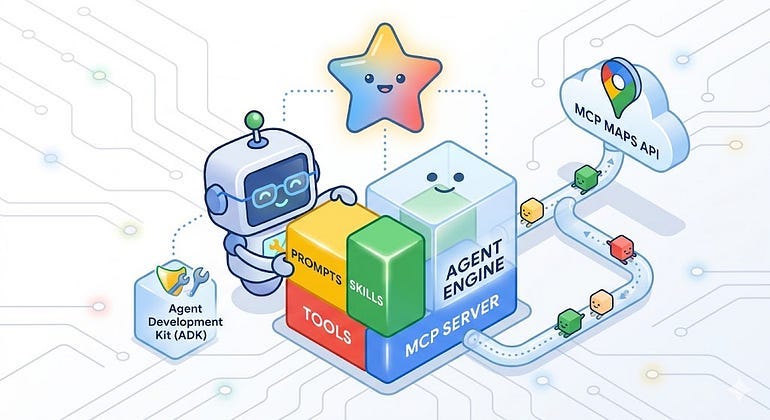
Beyond the Megaprompt: Clean Agent Architecture with Google’s ADK and MCP by Cloud GDE A. Enes Turan (Türkiye) explores a cleaner architectural pattern for AI agent development using ADK and MCP to decouple capabilities into state-aware modules. It discusses programmatic prompt compilation, isolated skill maps, unified interfaces, and deployment via Agent Engine to address megaprompt limitations.
The Agent-as-Tool Pattern by Web GDE Tamas Piros (Hungary) describes the pattern, where an LLM orchestrates specialist sub-agents by deciding which to run, how often, and with what arguments. For explanation, he made a space crew recruiting system using ADK.
[Codelab] Build a Multi-Agent Creative Studio with Google’s Agent Stack: ADK, A2A, MCP on Cloud Run & Agent Runtime by Cloud GDE Saoussen Chaabnia (Tunisia) provides a technical deep-dive into the architecture behind this codelab. He examines eight architectural patterns for building distributed agent systems, detailing how to structure agents, manage skills, orchestrate workflows, etc.Frameworks and Research
JAX/TPU
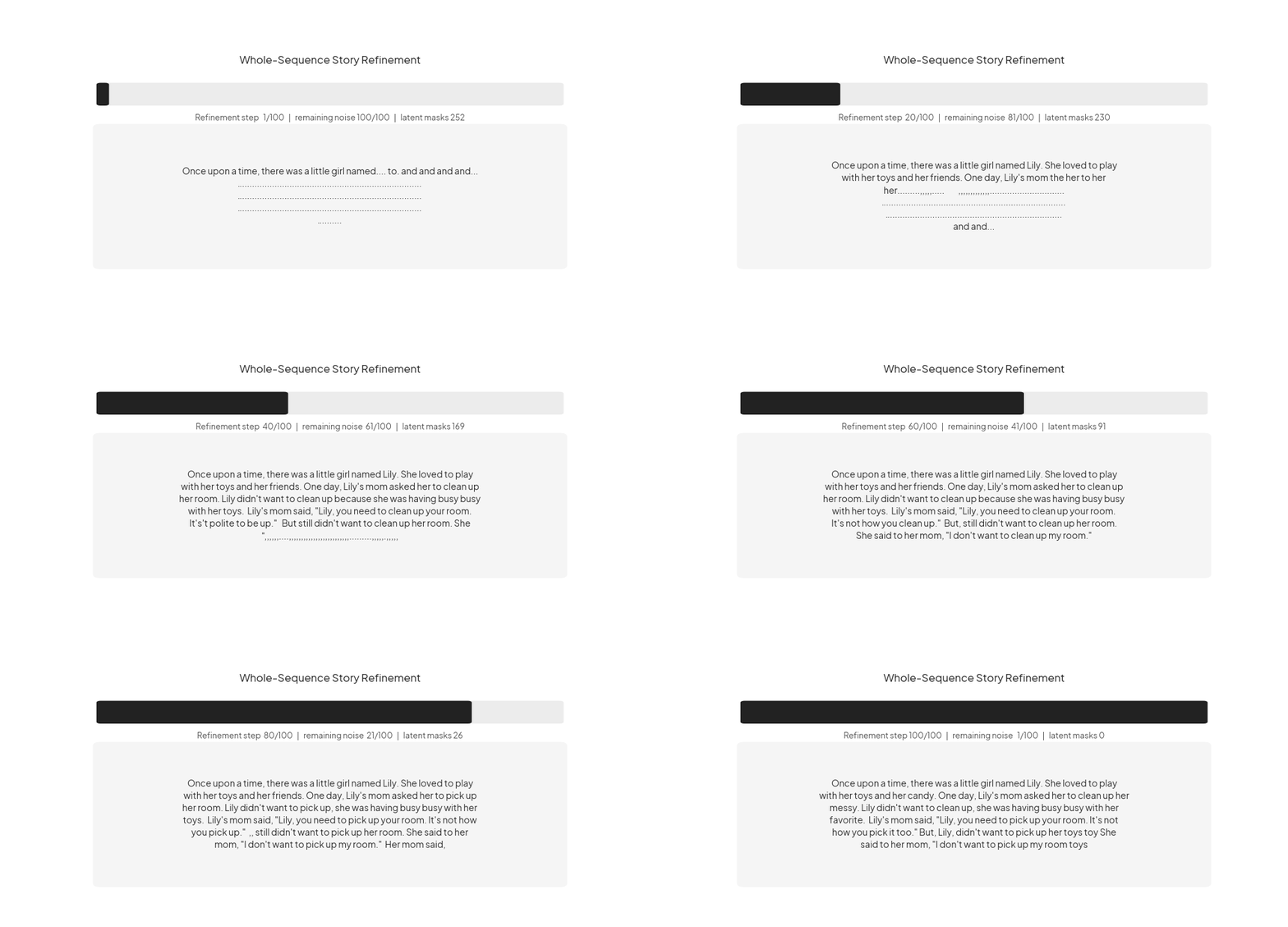
Discrete Language Diffusion: Global Refinement on JAX/TPU by AI GDE Sungmin Han (Korea) explored the application of Diffusion mechanisms to text generation to allow global sequence refinement and an iterative recovery of original tokens from a masked state.
GPT Writes One Token at a Time. This Model Writes Entire Blocks at Once. by AI GDE Young bin Lee (Korea) introduced Diffusion Language Models (DLLMs) as a novel text generation approach that utilizes parallel block generation inspired by image diffusion models. He detailed building and training a character-level DLLM on Sherlock Holmes’ works using Flax NNX and TPUs.
Cut Cross Entropy on JAX/Tunix TPU by AI GDE Chansung Park (Korea) demonstrates that Cut Cross Entropy removes a real loss-logits memory wall without materially changing training results on Gemma LoRA SFT with JAX/Tunix on TPU v5e. He also shared Sequence Packing on JAX/Tunix TPU turning padding-heavy SFT batches into useful-token throughput.

The Local Model That Doesn’t Sleep: Gemma 4 + MTP as a Marathon Engine by AI GDE Ertuğrul Demir (Turkey) explored the use of Gemma 4 with Multi-Token Prediction (MTP) in vLLM as a local LLM solution for long-running tasks, comparing its performance with and without MTP.
Aligning LLMs for Safety : Tunix Post-Training on Anthropic HH-RLHF by AI GDE Yannick Serge Obam (US) provides a comprehensive tutorial on post-training an LLM for the Technical AI Safety domain using the JAX/Tunix.
Unboxing Gemma: High-Throughput Sparse Autoencoder (SAE) Training on Google Cloud TPU v5e by AI GDE Rabimba Karanjai (US) explores training SAE on TPUs to achieve mechanistic interpretability of Gemma, detailing the hardware-software synergy of TPUs and JAX that enables high-throughput training.
From Generalist to Domain Expert: Building InsureJAX with Gemma 4 on TPUs by AI GDE Patrick Haralabidis (Australia) shared the process of fine-tuning Gemma 4 E2B-IT using JAX/TPUs to create a specialized insurance agent named InsureJAX.
Organizing Randomness: Contrastive Learning in JAX by AI GDE Taha Bouhsine (US) presents JAX code for contrastive learning losses and visualizes how different losses organize points in a 2D space.
#TPUSprint Fine Tuning your Small Model in Education Domain to Make It Local Model as Standalone Assistant Model in Mobile Computing Device by AI GDE Joan Santoso (Indonesia) fine-tuned Gemma 3 into a specialized Indonesian educational tutor model using JAX, Tunix, and QWIX for Quantization LoRA training. He also shared Building a Recommenders System for Massive Dataset using Keras-RS and SparseCore.
#TPUSprint Optimizing 3D Gaussian Splatting (3DGS)on TPU with JAX by AI GDE Muhammad Ghifary (Indonesia) explores the strategic evolution of 3D computer vision by transitioning 3DGS from custom NVIDIA CUDA kernels to a JAX framework optimized for TPUs.
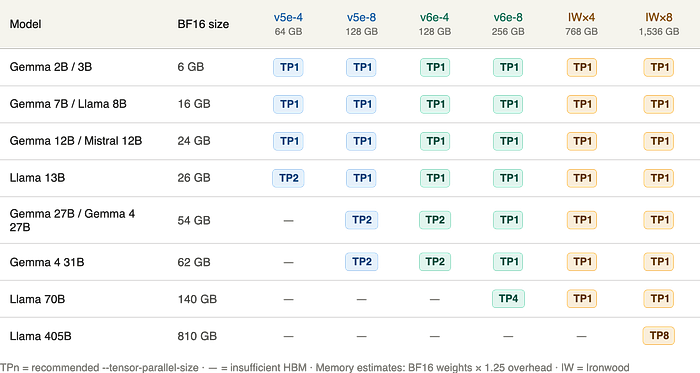
#TPUSprint vLLM on Google Cloud TPU: A Model Size vs Chip Cheat Sheet (With Interactive Tool) by AI GDE Grace Gong (US) helps in selecting the right TPU configuration, determining tensor_parallel_size, and assessing cost-effectiveness for various LLM workloads.
ML Research using JAX/TPU
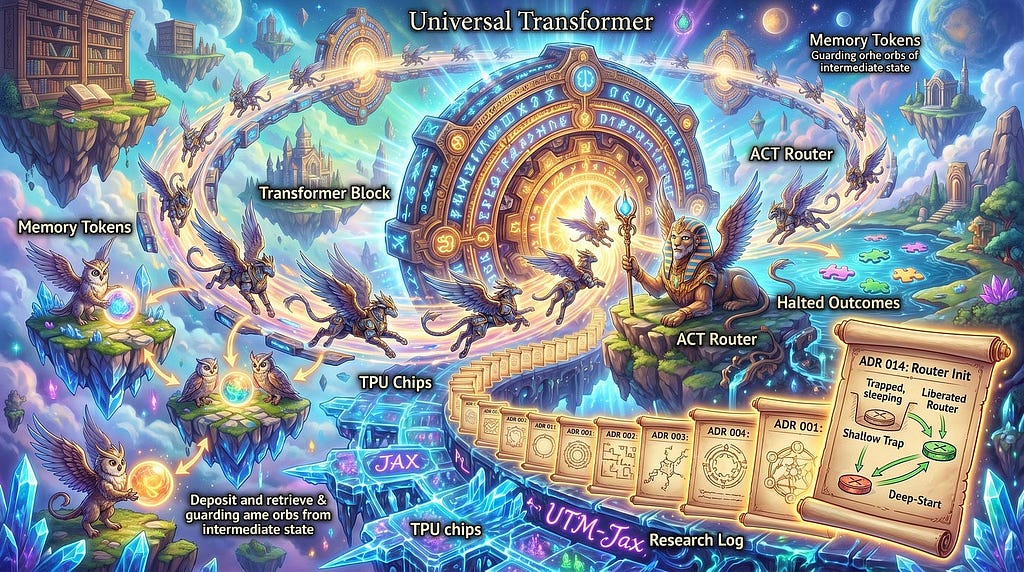
#TPUSprint Why I Keep Coming Back to Universal Transformers (UT) by AI GDE Grigory Sapunov (UK) discusses his continued interest in UT (his paper — Universal Transformers Need Memory) and a JAX implementation called UTM-Jax, covering architectural choices like memory tokens and Adaptive Computation Time.
https://medium.com/media/2166cdd58f017a2fd2d35be95a3ab9fa/href
#TPUSprint Bringing Karpathy’s Autoresearch to Google Colab, TPUs, and JAX by AI GDE Dimitre Oliveira (Brazil) explores how to run Andrej Karpathy’s autoresearch project on Colab by leveraging TPUs and JAX.
#TPUSprint I Rebuilt Karpathy’s NanoChat in JAX by AI GDE Omotayo Aina (UK) ported Andrej Karpathy’s NanoChat architecture from PyTorch to JAX and Flax NNX, training an 885K parameter nano model on TinyStories in under 10 minutes on a single GPU.
Training a 19M Parameter Story Generator by AI GDE Taha Bouhsine (US) trained a GPT language model from scratch on the TinyStories dataset using flaxchat, a JAX/Flax NNX port of nanochat.
The Hidden Performance Trap in Causal Ring Attention by AI GDE Rabimba Karanjai (US) addresses a critical performance bottleneck in causal Ring Attention for long-context generative AI models.
Community Talks on JAX/TPU

Demystifying Latent Diffusion Models with JAX: A Blueprint for the Visual Generative AI (slide | repo) by AI GDE Muhammad Ghifary (Indonesia) explores the mechanics and high-performance implementation of modern visual Gen AI by charting the evolution of generative frameworks to Latent Diffusion Models and Diffusion Transformers.
AI Hypercomputer: Resilient AI infrastructure at scale by AI GDE Minho Ryu (Korea) delivered a talk at Cloud Next ’26 on scaling LLMs and maximizing training efficiency. He highlighted the synergy between the JAX AI Stack and GKE through empirical data from a 10-trillion-token training run, achieving 45% Model Flops Utilization and 99% Goodput.
Build Faster, Train Smarter: Exploring AI Acceleration with Google Cloud TPUs (slide | Colab notebook) by AI GDE Asma Merabet (Algeria) explores how Cloud TPUs power high-performance ML by covering TPU architecture, model optimization techniques, and hands-on model training with modern AI frameworks.
Running Gemma on JAX and TPUs | Stepwik
Getting Started with Gemma on JAX (repo | codelab) by AI GDE Jay Thakkar (India) covered how to leverage Gemma on JAX for efficient model development and experimentation.
Build with Gemma (slide | repo) by AI GDE Nitin Tiwari (India) delivered setting up a TPU v6e instance on Cloud to serve and run inference with the Gemma 4 26B-A4B-it model using vLLM, achieving high-speed latency.
From Tokens to Tools: Exploring Gemma (slide | Colab notebook) by AI GDE Krupa Galiya (India) explored building production-ready AI apps using Gemma models, including running them on TPU in Colab.
Keras
Keras Diffusion Lab by AI GDE Chansung Park (Korea) built a diffusion model from scratch to generate realistic fashion item images and implemented a class-conditional extension using Classifier-Free Guidance.
#TPUSprint What’s the deal with Keras Kinetic? A Beginner’s Guide to Deploying Code Simply on TPUs by AI GDE Kshitiz Rimal (Nepal) compares Keras Kinetic to native PyTorch with a step-by-step guides.
#TPUSprint TPU Blueprint: When, Why, and How to Scale ML Workloads by AI GDE Nathaly Alarcon (Bolivia) provides a strategic guide on TPU architecture, its evolution, and the Kinetic tool designed to simplify deploying Keras models.
#TPUSprint From local prototyping to GPUs in the GCP cloud: Creating a satellite image classification system using Keras and Kinetic by AI GDE Juan Guillermo Gomez Torres (Mexico) introduced Kinetic Keras to simplify scaling models from local prototypes to cloud-grade accelerators.
AI GDEs at AI Systems DevLabs
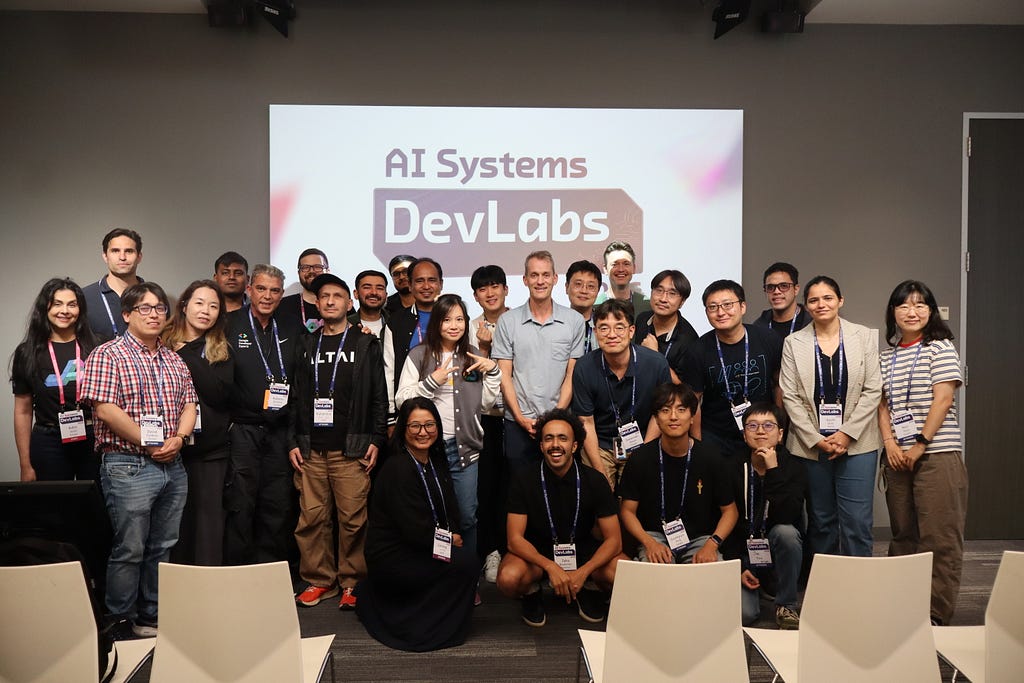
In June, AI GDEs participated in AI Systems DevLabs. Five AI GDEs delivered tech talks covering topics such as post-training using Tunix, TPU-friendly model porting, and kernel porting from PyTorch to JAX.
- Bridging the Silence: Using Motion Grids and On-Device Gemma to Translate Real-Time Indonesian Sign Language by AI GDE Esther Irawati Setiawan (Indonesia)
- Mastering LLM Post Training with Tunix by AI GDE Lai Fong Leong (Malaysia)
- From Triton to Pallas: Agentic, evolutionary kernel porting from PyTorch to JAX by AI GDE M. Yusuf Sarıgöz (Türkiye)
- TPU-friendly port of QwenImage with PyTorch/XLA by AI GDE Sayak Paul (India)
- Benchmarking vLLM on XLA Backends: From CUDA to OpenXLA for LLM Serving (blog post) by AI GDE Rabimba Karanjai (US)
APIs and Models
Gemini
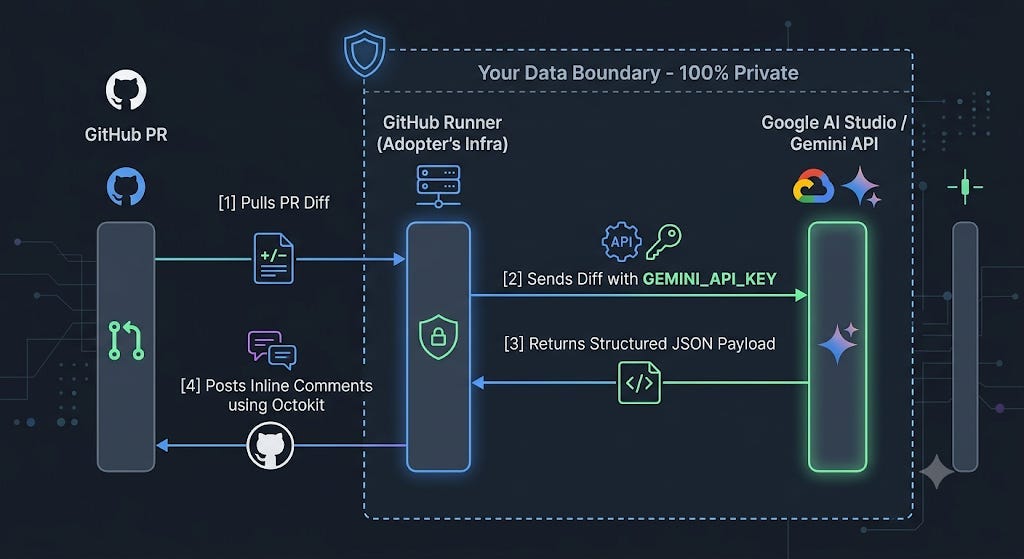
A Free, Self-Hosted Replacement for Google’s Code Review Bot by Cloud GDE Jean-Klaas Gunnink (Australia) presents a free, self-hosted, and open-source GitHub Action designed as a direct replacement for Gemini Code Assist to prioritize privacy and eliminate infrastructure overhead.
Build an Enterprise RAG Pipeline in Minutes with Gemini New API (Colab notebook) by AI GDE Muhammad Farooq (US) introduces the updates of the new Gemini File Search API.
Gemini API File Search: Enhanced Multimodal Capabilities with Embedding 2 by Cloud GDE Evan Lin (Taiwan) discusses the enhanced multimodal capabilities of the API. It highlights native multimodal file search, custom metadata and server-side filtering, page-level citations, and includes an open-source LINE Bot implementation as a live demo. He also shared upgrading LINE Bot’s text-to-speech summary function using Gemini 3.1 Native TTS to improve sound quality, simplify the codebase, and stabilize the connection.
Gemma
https://medium.com/media/7d9f3a2105a0216bea2fa7a1be71bdc9/href
My Friend’s MRI Didn’t Come with a Manual, So I Built One with AI (video | online demo) by AI GDE Rabimba Karanjai (US) shares how he developed Dr.MRI.AI, an open-source, privacy-first DICOM viewer that uses Gemma 4 and a three-stage AI architecture to analyze relevant medical image slices.
GemmaBridge by AI GDE Vinicius F. Caridá (Brazil) is an offline-first, multimodal AI assistant to bridge the communication gap for neurodiverse students, specifically those on the autism spectrum. He also built GemmaFin, a chat-based messaging interface for low-income families and informal workers to address the household debt crisis.
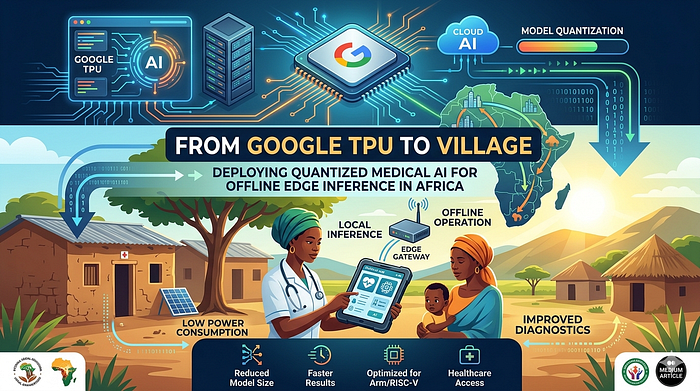
From Google TPU to Village: Deploying Quantized Medical AI for Offline Edge Inference in Africa by AI GDE Kondwani Nyirenda (Zambia) compressed MedGemma-1.5–4B into a 4-bit quantized version using NF4 and double quantization to solve the last-mile challenge of AI in African healthcare. It enabled capable medical reasoning to run completely offline.
Utilize and Deploying Gemma Open Model for Your AI System by AI GDE Joan Santoso (Indonesia) guides the end-to-end lifecycle of a custom AI system using GemmaVerse and Tunix for fine-tuning Gemma 4 models and covers how to achieve high-scale training efficiency with JAX and deploy the models using vLLM.
https://medium.com/media/3766e4d1b9f3828aa294944e72015450/href
Controlling Smart Home with Gemma 4 by Cloud GDE Konrad Clapa (Poland) demonstrates a smart home use case, showing how it enables local control without internet access or tokens.
Running Gemma 4 E2B on CPU: Is Local AI Finally Practical? by AI GDE Gabriel Preda (Romania) tests Gemma 4 E2B on a no-GPU setup in a Kaggle notebook to assess performance, limitations, and real-world usability. In Run Gemma 4:E4B Locally with Ollama, he provides step-by-step guides.
[Hot 👏] Local-First AI Done Right: How Gemma 4 E2B and ‘Thinking Mode’ Powered DiagramFlowAI (repo) by Cloud GDE Carlos Barbero (Brazil) introduces a local-first desktop app that transforms natural language descriptions into production-ready architecture diagrams. It runs 100% locally, requiring no internet connection or API keys.Kaggle
What reborn Kaggle teaches us about the future of AI by AI GDE Gabriel Preda (Romania) shares how Kaggle evolved from a ML competition platform to a broader ecosystem for AI system evaluation by focusing on building and assessing agentic, multimodal AI systems.

[May-Jun 2026] AI Community — Activity Highlights and Achievements was originally published in Google Developer Experts on Medium, where people are continuing the conversation by highlighting and responding to this story.