
For years, we ran data studies at Semrush the way most similar companies did: whenever someone had a good idea and whenever there was time to spare. Mostly, though, our efforts were limited to one or two major reports a year.
Then two things happened at once:
- AI started dominating organic search — and our own market got a lot more crowded and a lot less predictable.
- Organic traffic stopped being something you could plan a quarter around.
We needed a way to drive attention, attract traffic and citations, and stay top of mind.

The fix wasn’t a better single study. It was turning data studies into an official, repeatable program. One with ownership, a topic pipeline, a production process, and a distribution engine behind it.
Based on my experience as the Content & Product Marketing Lead at Semrush, I’ll share how we built that program, and how you can adapt that playbook for your own team.
Table of Contents
- Why Data Studies Are Worth Your Marketing Budget
- How We Built the Data Thought Leadership Program
- Final Thoughts
Why Data Studies Are Worth Your Marketing Budget
High-quality, original data studies strike gold in content marketing. They create something that didn’t exist before you published it.
In our age of AI repurposing, everything eventually ends up being recycled. Sharing opinions and playbooks is a powerful way to differentiate. And further supporting those opinions and playbooks with data gives you even more of the following:
- Originality that can’t be copied. A competitor can match your blog post in a day. They cannot match your proprietary dataset.
- Earned media without cold outreach. Journalists and creators need numbers to build stories around. When your content provides those insights, you suddenly have a good reason to reach out … or they might even start coming to you.
- Practical value, if you plan for it. Well-planned studies can also directly answer your customers’ questions, fuel your product marketing campaigns and promotional assets, and support your POV as a brand.
- AI citations. Not even the elephant in the room anymore, but something everybody talks about. AI visibility puts your brand directly in front of customers as they search, compare options, and make decisions. And original research is particularly powerful here. One recent analysis found that primary-research pages earned 3.3 times more AI citations per page than other content. (See how I just referenced Kevin Indig’s research?)
At the end of the day, it also leads to real business results beyond brand awareness.
Since we made data-driven thought leadership an official program, it has consistently attracted thousands of unique visitors without any paid promotion, driven hundreds of registrations, and brought in a substantial number of new customers.
How We Built the Data Thought Leadership Program
Long story short, we moved from sporadic data drops packaged as massive 80-page PDFs and turned data thought leadership into an always-on program. Why? Because we believed it was the key to establishing ourselves as thought leaders.
Here’s how we did it — so you can follow the same playbook.
Step 1: Make it an official priority.
Every program starts as an experiment, especially in organic growth. But projects like data thought leadership typically require significant resources and coordination across teams, so everyone needs to be on board.
For us, two things had to happen for it to become something real:
- Getting recognition and buy-in at the company level. A program needs a budget line and a stakeholder who will defend it in planning meetings. Not just enthusiasm from one team.
- Assigning clear ownership. Someone has to own the pipeline, the calendar, and the results, or the program will eventually revert to being ad hoc.
This often comes down to assigning a DRI on your content or marketing team and, more importantly, a person in the data science department who’ll have the bandwidth to help them when needed.
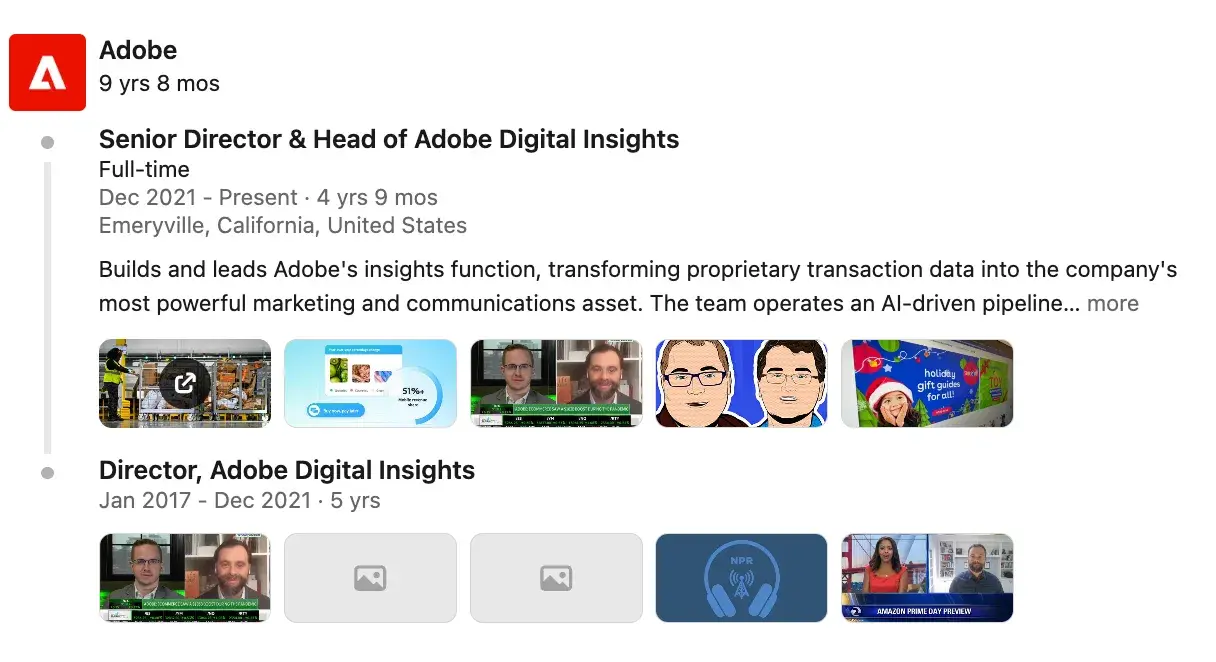
Some companies go further and build an entire team specifically for this function. Think Taylor Schreiner and Adobe’s Digital Insights team:
It’s also important that other teams (such as design, campaigns, and email) are aware of the expected impact so they can prioritize promotion, production, and other support.
Step 2: Build a research content plan.
To make your data thought leadership strategic, you need to plan it around industry trends, business priorities, the product roadmap, and customer needs.
The bottom line is that it should be much more than a list of good or interesting ideas for it to deliver business value.
Here’s what we factor in when building research plans for each quarter:
- Core topical areas our brand should own
- Product marketing roadmap and priorities
- Industry shifts and trends worth quantifying
- Frequent customer questions and concerns
- Brand narratives and POVs you want to own
- Seasonal shifts and major events, such as the Super Bowl and Black Friday
- Ad hoc opportunities that come from conversations, sales calls, or support tickets
The most important filter is alignment: does this topic support Semrush’s messaging, positioning, and the brand perception we’re building?
For example, we believe that unifying SEO and AI visibility efforts is the best way to handle organic growth going forward — and this POV directly ties to our value proposition.
This alignment has helped us make our narrative and campaign assets stronger.
Do you want an even better approach? Find out what your customers need, what their pain points are, and what they want to know more about.
As a PMM, I was interviewing users every week. And one question kept coming up: Why do you often get a citation, but not a brand mention? So we partnered with Kevin Indig and published a study to answer it:

You have to do the work to uncover the questions your research should be answering.
Step 3: Make sure your data adds practical value.
It’s easy to fall into the trap of publishing data for the sake of data, or simply because it feels relevant to your brand. If a study doesn’t offer real practical value, surface something genuinely new, or make people want to ask a follow-up question, it’s probably not worth your team’s time.
Yes, original research can earn links, mentions, and trust. But more companies are doing it every year, which means having proprietary data isn’t enough on its own.
First, check what research already exists in your space and find an angle nobody has explored yet. Then, make sure the piece gives people something they can do with the findings. A playbook, a takeaway, a decision they can make differently.
The fundamental rule of good content still applies to original research: the data isn’t the value on its own — what you help someone understand or do with it is.
For every piece we publish, we prioritize adding the why, what, and how:
- Why the finding matters
- What it means for the reader
- How they can use it to make a better decision
Data without a “so what” is just noise.
Step 4: Design the production process for your data content.
Having a clear process and an SOP will take time. But it’s one of the most essential steps if you want to release studies on time, react to trends, and stay ahead of others in your niche.
The biggest challenge we ever faced as a team was increasing our speed. Study ideas would often sit in the backlog for months, and we’d miss the opportunity to be the first mover. This allowed others to publish their takes on the data first.
Here’s what you can do to avoid this:
- Define and document workflows for each study type (more on that below). Put together clear SOPs that outline project ownership and how to execute.
- Empower your Marketing org with tools that help them execute simpler pieces without blockers, such as a budget for survey tools and enough credits for AI tools like Claude, MCPs connected to Looker and other analytics tools.
- Create study brief templates that describe the methodology and can be shared with the data team.
- Determine an agreed-upon timeline. For example, the data team reviews the brief within 48 hours, provides data for a small study within seven days, and provides data for a bigger study within 14 days.
- Share your study plan with the team, making sure it includes a clear timeline with confirmed dates for each quarter.
One important note to make: your workflows will depend on each particular scenario. For us, all studies eventually fell into one of these four categories:
Category 1: Studies requiring the data science team. These need a defined intake process and a clear brief.
Category 2: Collaborations with industry experts, like our work with external industry analysts such as Kevin Indig, who bring an outside data lens to a shared question and help us increase reach in relevant communities.
Category 3: Studies marketers can run themselves, including surveys and lightweight analyses that don’t require engineering time.
Category 4: Co-branded studies with other companies. While being more time-consuming, this method is extremely rewarding as it helps you build relationships and reach more people.
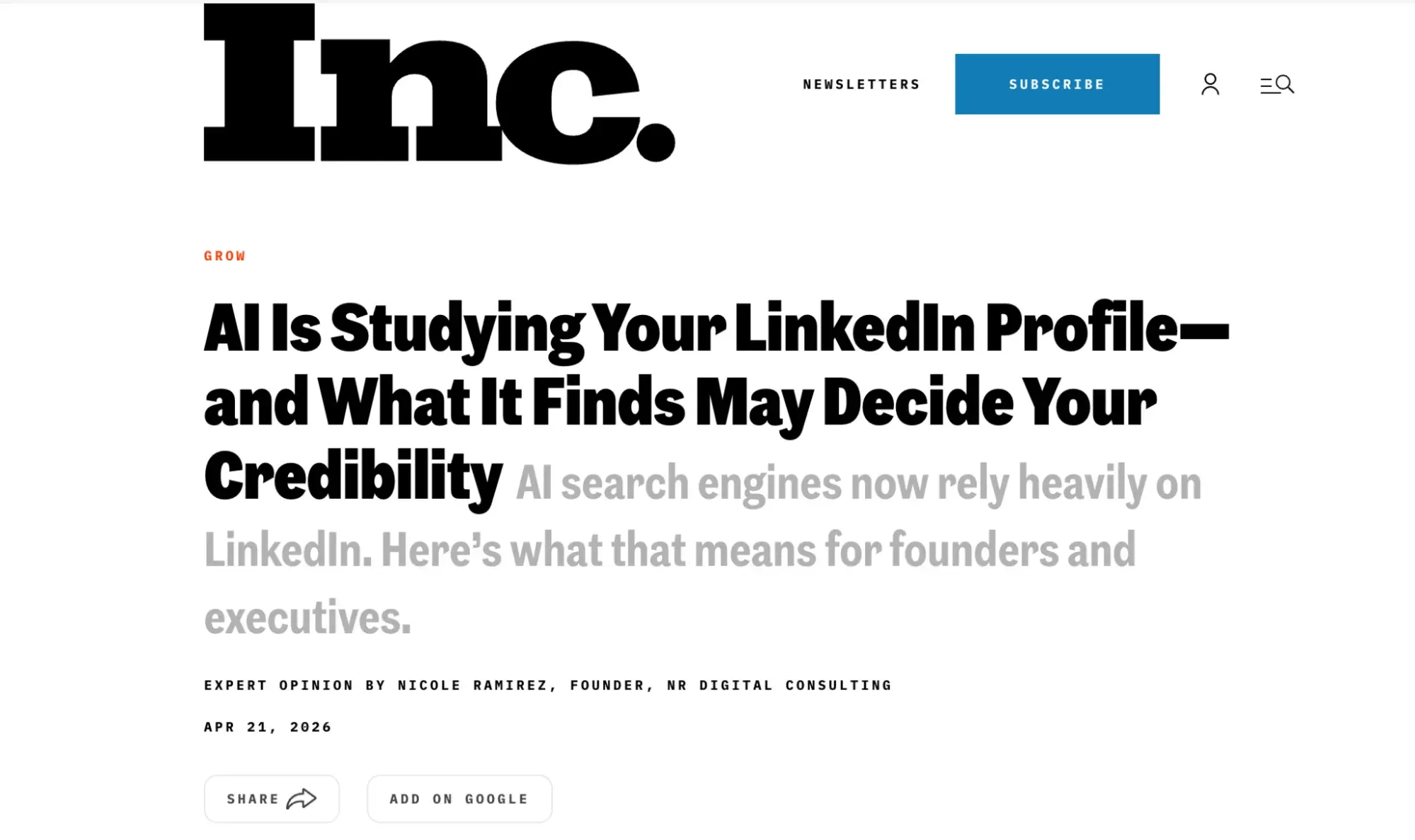
For example, our research with LinkedIn combined Semrush’s AI-citation data with LinkedIn’s own content and engagement data to study what gets resurfaced by AI tools and why. Neither company could have produced that lens alone.
The result? Our most viral research piece to date. It continues to be featured by the media, was heavily promoted by LinkedIn, has been reshared by influencers and customers, and has been repurposed into multiple pieces of content.
Step 5: Create a distribution engine for your studies.
Going back to how saturated the content space is these days, you always need a solid distribution plan. And this is often where things fall through the cracks.
You should come up with original ideas and hooks for each study and create a repeatable distribution process. Here’s what’s worked well for us:
- Repurposing every study into multiple pieces: A short-form video, a slide deck for sales, a newsletter breakdown, a LinkedIn carousel.
- Building a network of journalists and creators and pitching each study before publication, potentially under embargo. We always supported it with a proper pitch deck and data highlights.
- Promoting the study on social media through both corporate and employee accounts. The latter has always given us a massive lift.
- Using gated and ungated promotion, including PPC, depending on the goal of that specific study
- Promoting each new study through dedicated emails and/or newsletter features.
- Leveraging executive content on LinkedIn, so leaders amplify the findings in their own voices.
The goal is for every study to have a life beyond the report itself.
Step 6: Measure success (but don’t obsess over numbers).
Finally, measurement often goes wrong in one of two ways. You’re either measuring too much or not measuring at all.
The truth, as always, lies somewhere in the middle.
Data thought leadership often gives you subtle signs of success that aren’t always directly attributable to the bottom line, like someone from your ICP commenting or sharing on LinkedIn, or a journalist mentioning your brand.
And while studies can bring in leads and even customers, that’s rarely what they’re directly optimized for.
What usually makes sense tracking is:
- Traffic and on-page engagement
- Social media engagement (such as shares, people repurposing your content, and comments)
- Media mentions and backlinks
- AI citations and brand mentions generated thanks to your studies
- Downloads for gated studies and subsequent MQLs
- AI and social media share of voice growth as a consequence
It’s a good idea to monitor downstream revenue, including new MRR and cross-sell MRR, where you can trace it. But it probably shouldn’t be the main goal of your data content. Besides, the impact of your data program will compound over many releases, and you need to give it time.
Final Thoughts
Data thought leadership earns its place as a growth channel by becoming a program with real ownership, a topic pipeline tied to your brand strategy, a repeatable production process, and distribution planned before launch.
You don’t need all of that on day one. Start with one experiment, prove the model works, then build the system around it once you have something to point to.
The most important learning for our team?
Even unique content like original studies can soon become a commodity once your competitors see its value. Differentiating, prioritizing customer value, and connecting the dots between your data and the bigger industry picture are what will keep your research relevant.





![how-to-create-an-ebook-from-start-to-finish-[free-ebook-templates]](https://prodsens.live/wp-content/uploads/2022/08/2671-how-to-create-an-ebook-from-start-to-finish-free-ebook-templates-380x250.jpeg-23keepprotocol)
