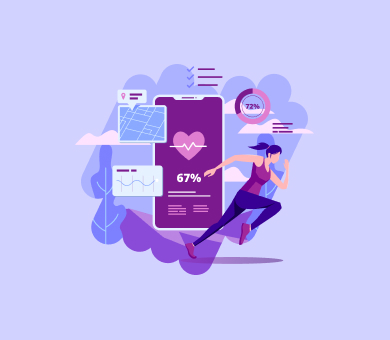
Remote patient monitoring apps, spawned by technological advancements, are must-have tools in modern medical care. They let patients keep an eye on their fitness stats, predict problems, and even talk to doctors without needing to go to a clinic.
This article provides a comprehensive guide on developing such a solution, from understanding user needs to deployment and maintenance.
The Importance of Health Monitoring Software in Modern Medical Care
The importance of healthcare solutions is non-negotiable. They not only monitor patients’ conditions and spot problems early on but also give them tips tailored to their personal issues.
Put simply, people can be more in control of their physical conditions and mental health, while doctors can monitor them from far away, catch issues, and even prevent disastrous problems before they happen.
On top of that, using health monitoring solutions makes patients more involved, prolongs life expectancy, and saves money on costly treatment.
Benefits of Creating a Customized Health Monitor App
Deciding between a ready-made program and a custom fitness app can be tricky. Here’s why making your own software might be the better choice.

First, a custom mobile application can be made just for you, with features that match what you really need. In simple terms, it can do exactly what you want it to, without any extras that only stretch your budget.
Second, your own solution can be made to work with your current systems, like electronic medical records, and scale as your organization grows. You can add new features or make updates easily, so your remote monitoring platform always does what you need it to do.
Third, by building your own software, you can make sure it’s secure and follows all the rules about patient privacy. This means you can guarantee your patients’ information is safe.
Finally, when you have a bespoke application, you’re in control of it. Since you own the software, you can make changes whenever you like instead of relying on someone else to do it for you.
Essential Features for Remote Patient Monitoring Software
When making software, no matter the industry, it’s important to include certain functions to make it helpful and easy to use. Here’s a breakdown of what these might look like if we take a healthcare solution:
- Data Tracking: First, the app must track important vitality data, like heart rate, blood pressure, and sleep patterns. Users should also be able to enter these details manually or by connecting wearable devices.
- Well-being Analysis: The software should be able to analyze the condition data it collects. This analysis can provide users with insights into their fitness trends and potential risks.
- Telemedicine: Users should be able to schedule virtual appointments with healthcare providers through the real-time health monitoring system. This makes it easier to get medical advice without having to visit a doctor’s office.
- Detailed Reports: The software must create regular reports that show the user’s well-being data in a summary. These reports can be shared with medical care providers to aid in consultations.
- User Support: The virtual monitoring app should offer support resources like FAQs and guides to help users navigate it effectively. There should also be options for contacting customer support if users have questions or issues.
- Social Features: The app could include capabilities allowing users to connect with other people who have similar goals or challenges. This feature can provide a sense of community and support.
Steps to Creating a Successful Wellness Monitoring Solution
Developing a successful medical care monitoring program is quite complex. To make it easier, we suggest getting help from a reliable software development company like SCAND.
Our experts will support you through each step and ensure the solution works well, is easy to use, and meets all industry standards and regulations.
Understanding User Needs and Requirements
We start by collecting app ideas, setting clear goals for the software, and creating measurable metrics for success, like how much users engage with it and the health improvements it brings.
Designing a User-friendly Interface and Experience
Next, our designers create wireframes and prototypes to visualize the product, show its layout, and test out navigation. We then test it with real users to get feedback and make the design easier to use for everyone.
Developing Features and Functionality
Using agile development methodologies, our engineers begin the development process. We can use a phased development strategy, beginning with a limited MVP (Minimum Viable Product) to collect user feedback and fix any issues before the full launch.

Implementing Data Security Measures
In this phase, our team uses the best security methods to keep data safe. We use encryption, secure logins, and access controls to protect sensitive information. Also, we do regular protection checks to find and fix any possible risks.
Testing and Quality Assurance
Our QA team tests the software on lots of different devices, operating systems, and networks to find and fix any problems. We use both manual and automated testing to make sure the product works well, is secure, and works on different setups.
Deployment and Launch
Before we deploy the remote patient monitoring software, we finish all required documentation and compliance checks. Then, we submit it to the app stores, following their submission rules.
Gathering User Feedback and Iterating
After that, we gather feedback from users using analytics, reviews, and surveys to see what needs improving. Using their responses, we decide what updates and new features to release. We keep updating the software from time to time to make sure it stays helpful and up-to-date.
Providing Ongoing Maintenance and Support
The SCAND development team provides ongoing maintenance and support to keep the product functional, secure, and updated. We regularly release updates to fix vulnerabilities and compatibility issues and incorporate user feedback.
Our responsive team is available to quickly address user questions and technical problems, ensuring a positive user experience.
Conclusion
To make a health monitoring app, you need a solid plan. It begins with understanding what users need and making sure their data stays safe and ends with keeping the app updated.
By following these steps and teaming up with a trustworthy software development crew, you can create a great product that improves healthcare and brings value to its owner.
If you need healthcare software development services, feel free to contact us. Our team is here to chat about what you need and come up with solutions that fit you like a glove.
The post How to Develop a Health Monitoring App appeared first on SCAND.

![how-to-use-ai-to-market-your-small-business-[+-my-favorite-ai-tools]](https://prodsens.live/wp-content/uploads/2024/06/23871-how-to-use-ai-to-market-your-small-business-my-favorite-ai-tools-110x110.webp-23keepprotocol)